
700 Reasons to Move Beyond Cabernet
Italian Grapes vs French Varietals: Why It’s Time to Drink Beyond the Familiar
If you walk into most wine shops in America and ask for a red, you’ll hear the same names: Cabernet Sauvignon. Merlot. Maybe a Bordeaux blend.
For whites? Sauvignon Blanc. Chardonnay.
These grapes have become international reference points. They are safe. Recognizable. Reliable.
But here’s something many people don’t stop to think about:
Cabernet Sauvignon, Merlot, Sauvignon Blanc, and Chardonnay are all originally French grapes.
Even when you drink them from Napa Valley or New Zealand, their genetic and historical roots trace back to France. They became global. They became dominant. They became the “default language” of wine.
And that’s exactly why this conversation matters.
I represent Above Wines, and our mission is simple:
Help regular wine drinkers move beyond the obvious and discover the extraordinary depth of Italy’s native grapes.
Because Italy is not just another wine country.
Italy is a vineyard of history.
Wine Is Geography — But Even More, It Is History
It is always difficult to tell the story of a wine or a grape and confine it to one territory. Wines are born from geography — yes — but even more from history.
Over centuries, human hands reshaped landscapes. Monasteries cultivated vineyards. Trade routes moved vines across hills and coasts. Culture shifted, evolved, adapted.
Wine is culture. And culture is alive.
Take Sangiovese — one of Italy’s most important grapes. Historical research by scholars such as Beppe Sangiorgi and Giordano Zinzani suggests its presence dates back to at least the 17th century in Romagna, with roots possibly connected to medieval monastic networks along the Apennines.
And here lies a crucial distinction:
In France, wine tradition historically emphasized the estate — the château — and the parcel of land. The grape variety often wasn’t even listed on the label.
In Italy, we did the opposite.
We built identity around the vitigno — the grape itself.
The plant had personality. The grape carried culture. The land shaped it — but the grape remained the protagonist.
That difference created something extraordinary.
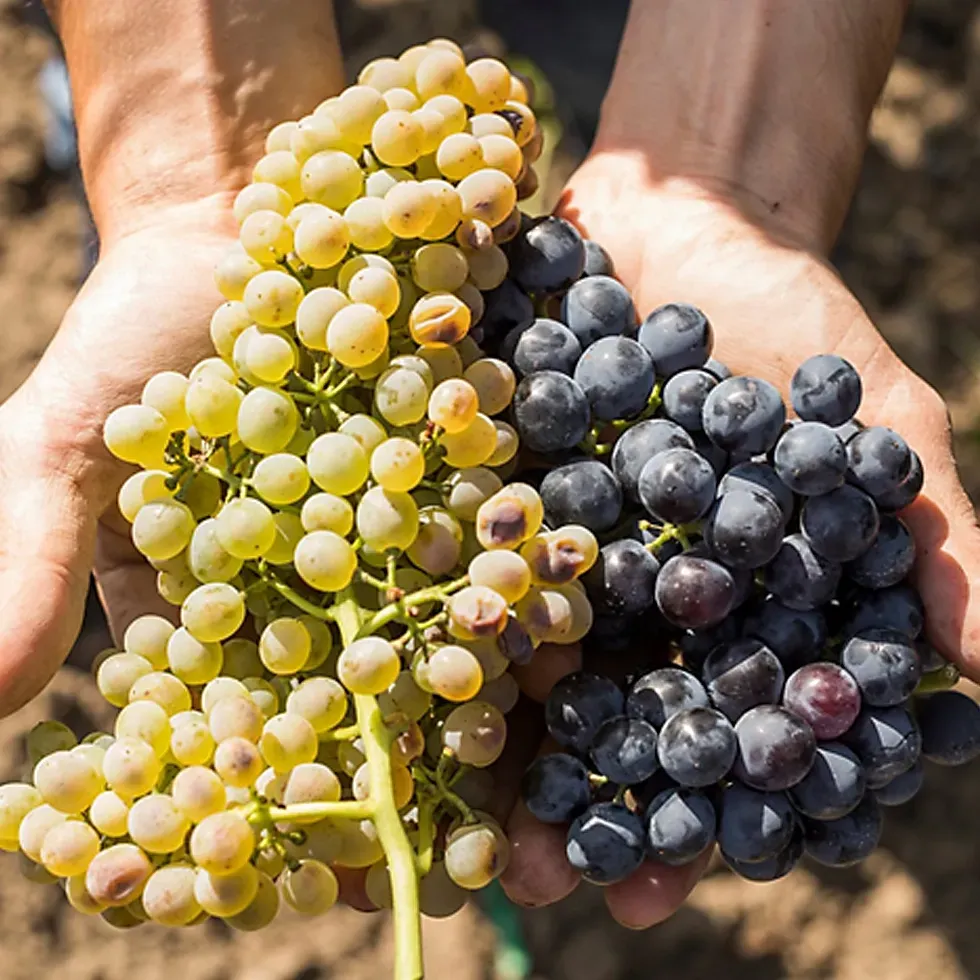
Italy has over 700 indigenous grape varieties.
Seven hundred.
Not trends. Not marketing creations. But living agricultural heritage.
If You Love Cabernet Sauvignon…
If Cabernet Sauvignon is your comfort zone — structured, bold, age-worthy — remember: you are already drinking a French grape, even if it comes from California.
So why not explore an Italian grape that delivers the same structure — but with deeper territorial identity?
Aglianico
Often described as the “Barolo of the South,” Aglianico offers firm tannins, dark fruit, spice, and serious aging potential.
Sagrantino
One of the most tannic grapes in the world. Deep, powerful, built for structure lovers.
Nero di Troia
Elegant yet muscular. Dark fruit, earth, complexity — structured but refined.
Montepulciano (Abruzzo)
Generous and rich, with beautiful fruit concentration and approachability.
These are not imitations of Cabernet.
They are expressions of territory — shaped by Mediterranean sun, limestone soils, volcanic influence, and centuries of local knowledge.
If You Love Merlot…
Merlot, too, is French at its core — born in Bordeaux before spreading worldwide.
If you prefer softness, plush fruit, and rounded tannins, Italy offers beautiful alternatives:
Cannonau offers warmth and Mediterranean herbs.
Primitivo delivers ripe fruit with balanced structure.
Dolcetto is vibrant, food-friendly, and charming.
Corvina gives bright cherry notes and elegance.
You keep the comfort — but gain authenticity.
If You Love Sauvignon Blanc (Especially New Zealand Style)…
Sauvignon Blanc may feel synonymous with New Zealand today — but its origins are French, from the Loire and Bordeaux.
If you love freshness, aromatics, and crisp acidity, Italy gives you options with even stronger territorial character:
Vermentino brings saline coastal brightness.
Fiano adds aromatic complexity and texture.
Greco delivers minerality and structure.
Pecorino offers vibrant acidity and energy.
These wines don’t imitate Marlborough.
They reflect Mediterranean landscapes.
If You Love Chardonnay…
Chardonnay — another French original — became global because of its adaptability. It grows almost anywhere.
But that adaptability can also make it feel universal.
If you appreciate texture, balance, and elegance, try discovering whites that are inseparable from their land:
Timorasso offers structure and aging capacity.
Garganega provides almond notes and minerality.
Carricante brings volcanic precision.
Serious Trebbiano can rival many great whites in complexity.
These grapes are not international travelers.
They are rooted.
Why Move Beyond the Familiar?
Because familiarity can quietly limit discovery.
Cabernet, Merlot, Chardonnay, Sauvignon — they are global French grapes that conquered the world. There’s nothing wrong with loving them.
But Italy preserved something different.
Italy preserved identity through diversity.
When you drink indigenous Italian varieties, you are tasting:
Centuries of localized agricultural knowledge
Grapes preserved because families believed in them
Wines that reflect a specific hillside, a coastal breeze, a volcanic slope
This is not about rejecting French varietals.
It’s about expanding your palate beyond the predictable.
And at Above Wines, that is exactly what we help you do.
On our website, we guide you based on what you already love. If you enjoy Napa-style Cabernet or Marlborough Sauvignon Blanc, we suggest Italian alternatives that will feel familiar — but far more rooted in terroir and history.
A Cabernet Lover’s Discovery: Calabria’s Hidden Gem
If you are a Cabernet blend lover, I want to introduce you to something that may completely shift your expectations.
From the historic Cirò region of Calabria comes the signature blend of Torre Aragonese Winery.
This is Calabria’s answer to a structured French-style blend — but built entirely from indigenous grapes.
Crafted from Gaglioppo, Greco Nero, and Magliocco, this wine reflects an ancient terroir shaped by Greek settlers thousands of years ago. Cirò is one of Italy’s most historically significant wine regions — and this blend carries that legacy.
In the glass, it opens with vibrant black currant aromas — immediately familiar to Cabernet lovers — layered with Mediterranean herbs and wild berries.
On the palate, it is full yet fresh. The texture is soft and enveloping, supported by elegant, well-integrated tannins. Structured, yes — but refined. Balanced. Harmonious.
Serve it between 60–64°F to allow its depth and complexity to unfold fully.
It pairs beautifully with roasted meats, aged cheeses, soppressata, and especially Ragù di Cipolla di Tropea — the sweet and savory Calabrian onion ragù that highlights the wine’s earthy and spicy undertones.
This is not a copy of Bordeaux.
It is Calabria speaking its own language — confidently.
The Invitation
If you love Cabernet Sauvignon, remember: you already love a French grape.
Now imagine loving something just as structured — but deeply Italian.
Italy’s 700+ native grapes are waiting — not to replace what you enjoy, but to deepen it.
At Above Wines, we believe wine should tell a story. And sometimes, the most exciting chapter begins when you step outside the familiar label.
Explore with us.
Discover your Italian counterpart.
You might never look at Cabernet the same way again.
Salute. 🍷
Try the Wine, 24hr Shipping:
Calabria Red Blend, Torre Aragonese

Sign Up to our Newsletter
Unlock exclusive first access to our Pop-Up Events, immersive Wine Experiences, and new wine releases...