Cirò: Calabria's Ancient Wine Heart
In the town of Cirò, wine is not a product. It is memory, language and landscape, passed from one generation to the next for almost three thousand years.
Drive north from Crotone along Calabria's Ionian coast and the hills begin to fill with low, gnarled vines. Old men still call some vineyards by names their grandparents used. Families still gather in September to pick grapes together, and every household seems to have an opinion on whose cellar makes the best red.
This is the story of that place: its Greek myths, its two towns, its table, and the stubborn little grape that ties it all together.
Enotria: where the Greeks found the land of wine
Long before Rome, Greek sailors crossed the Ionian Sea and settled this coast. They were so struck by the vines of southern Italy that they gave it a name: Enotria, the land of wine.
A hero, a bow and a temple
Cirò's founding story begins with a myth. Philoctetes, the Greek archer who carried the bow of Heracles, wandered the seas after the Trojan War and finally came ashore here. Legend says he founded the town of Krimisa and built a sanctuary to Apollo Aleo, "the wanderer", where he dedicated his famous bow and arrows.
The myth has real stones behind it. In the 1920s, archaeologist Paolo Orsi excavated the temple's remains at Punta Alice, just north of Cirò Marina. Among the finds was the marble head of Apollo, carved around 440–430 BC, now one of the treasures of the National Archaeological Museum of Reggio Calabria. Other pieces are on display in the town's own archaeological museum in Cirò Marina.
The wine of Olympic champions
Krimisa gave its name to a wine, and that wine became legendary. According to tradition, it was offered to the victors of the ancient Olympic Games.
The link with the Games never quite faded. Cirò was given to medal winners at the Mexico City Olympics in 1968, and again at Athens in 2004, when the Games returned to Greece. Few wines anywhere can claim a bond with sport that spans more than two millennia.
Two towns, one soul
Cirò is really two places: the old hill town, which locals often call Cirò Superiore, and Cirò Marina down by the sea. The coastal town was actually part of Cirò until 1952, and the two still share one wine and one identity.
The city of wine and the calendar
In Italy, Cirò is known as the città del vino e del calendario, the city of wine and the calendar. The wine part is easy to guess. The calendar part is one of history's great surprises.
Luigi Lilio, a doctor and astronomer born in Cirò around 1510, wrote the proposal behind the calendar reform that Pope Gregory XIII adopted in 1582. In other words, the calendar we all use today was born in the mind of a man from this small wine town. His solution, which dropped ten days to realign the spring equinox, is so precise that it drifts only by a few days every ten thousand years.
Castles, towers and the sea
At the top of the old town stands Castello Carafa, with its round towers and pentagonal bastion. Its courtyard is paved with a nine-pointed star that locals attribute to Lilio himself. Visitors can explore a cluster of small museums in town, including a museum of wine and rural life and one dedicated to Lilio.
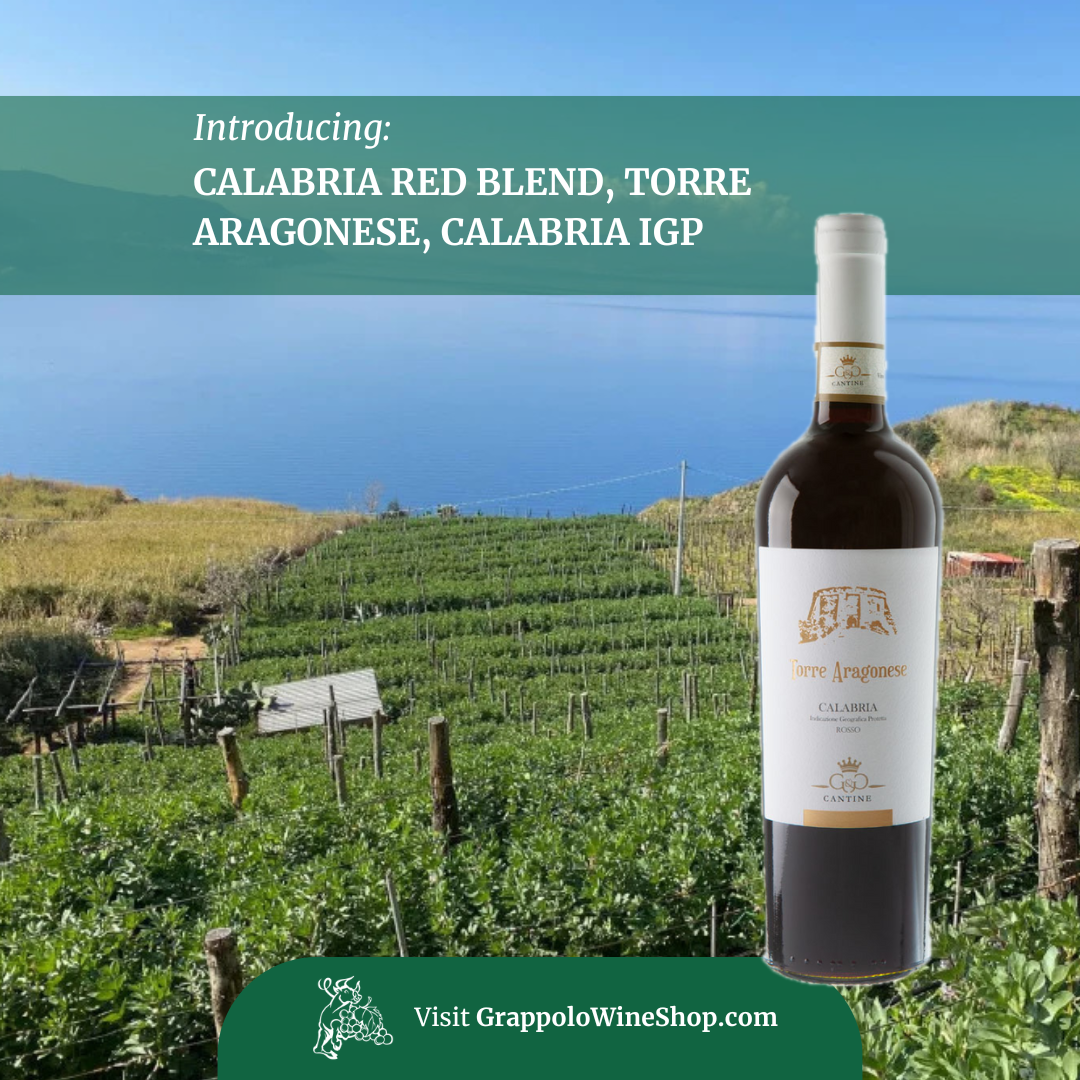
Along the coast, old Aragonese watchtowers still keep watch over the water. Built in the age when Spanish kings ruled southern Italy, they guarded the shore against raiders from the sea. Today they are a symbol of the coast, and their name lives on in one of the area's wineries, Torre Aragonese.
Life around the vine
In Cirò, wine has always been part of daily life rather than a luxury. For generations, families kept a few rows of vines, made their own wine in small cellars, and shared it at every meal.
The harvest
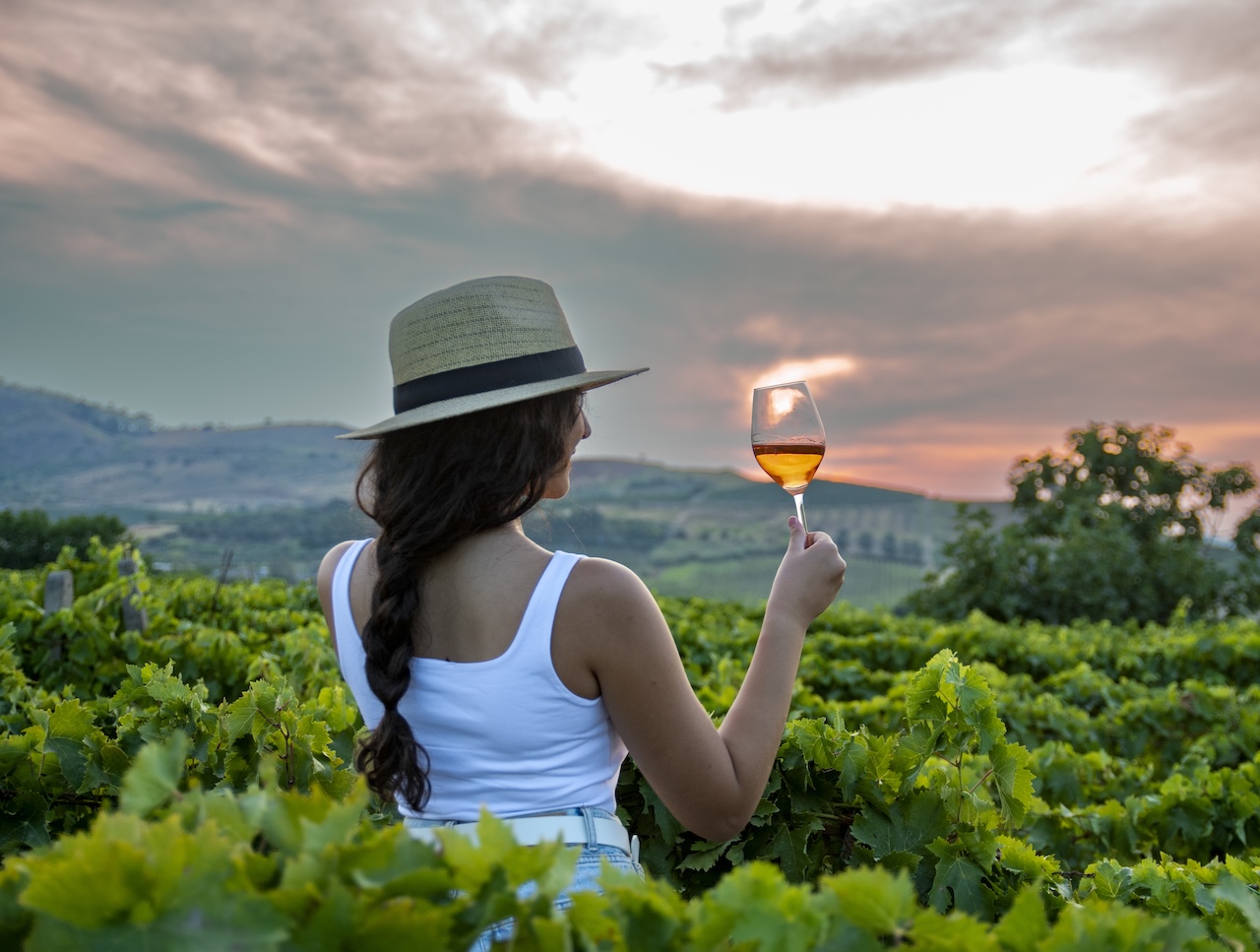
The vendemmia, the grape harvest, still marks the turning of the year. From late summer into autumn, the hills fill with pickers, tractors and crates of dark Gaglioppo grapes. It is hard work under a hot sun, but it is also a social ritual: neighbours help each other, and long lunches in the vineyard are part of the tradition.
The Cirò table
The local food explains the local wine. Calabrian cooking is bold, built on chilli pepper, olive oil, fish from the Ionian Sea and the cheeses of the hills.
Sardella, the "caviar of the south": a fiery red spread of tiny fish, Calabrian chilli and wild fennel, the gastronomic symbol of Cirò Marina and nearby Crucoli. Tradition says to eat it on rustic bread with a glass of chilled Cirò Rosato.
Pecorino Crotonese DOP: the area's sheep's milk cheese, from soft and sweet when young to sharp and spicy when aged.
Maccarruni al ferretto: hand-rolled pasta shaped around a thin iron rod, often served with rich meat sauces on Sundays and holidays.
Smoked ricotta, 'nduja and Calabrian salumi: spicy, savoury and made for a glass of red.
This is food with heat and character, and it needs a wine with freshness and grip to match. That is exactly what the grape of Cirò delivers.
Gaglioppo and the Cirò renaissance
The thread that ties Cirò's myths, towns and table together is a single grape: Gaglioppo.
The "beautiful foot"
Gaglioppo is Calabria's signature red variety, and most growers trace its roots to the Greek era. Its name is often linked to the Greek for "beautiful foot", a nod to the shape of its bunch. Its white partner, Greco Bianco, carries the Greeks in its very name.
The vineyards stretch from the coast up into the hills, sheltered by the Sila mountains and cooled by sea breezes. In the classic heart of the area, pockets of limestone and clay not found in neighbouring land give the local Gaglioppo its distinctive character. The result is a red that is light in colour but firm in structure, full of sour cherry, dried herbs and a savoury, almost salty finish.
From DOC to DOCG
Cirò became Calabria's first DOC in 1969 and is still the region's oldest and largest appellation. In the 1990s, the rules opened the door to international grapes. A group of small growers pushed back, launching what became known as the "Cirò Revolution": pure Gaglioppo, no new small oak barrels and minimal intervention in the cellar.
That pride in identity paid off. In 2025 Cirò Classico was promoted to DOCG, the first in Calabria's history, crowning a tradition that began with Krimisa nearly three thousand years ago.
Taste Cirò at home
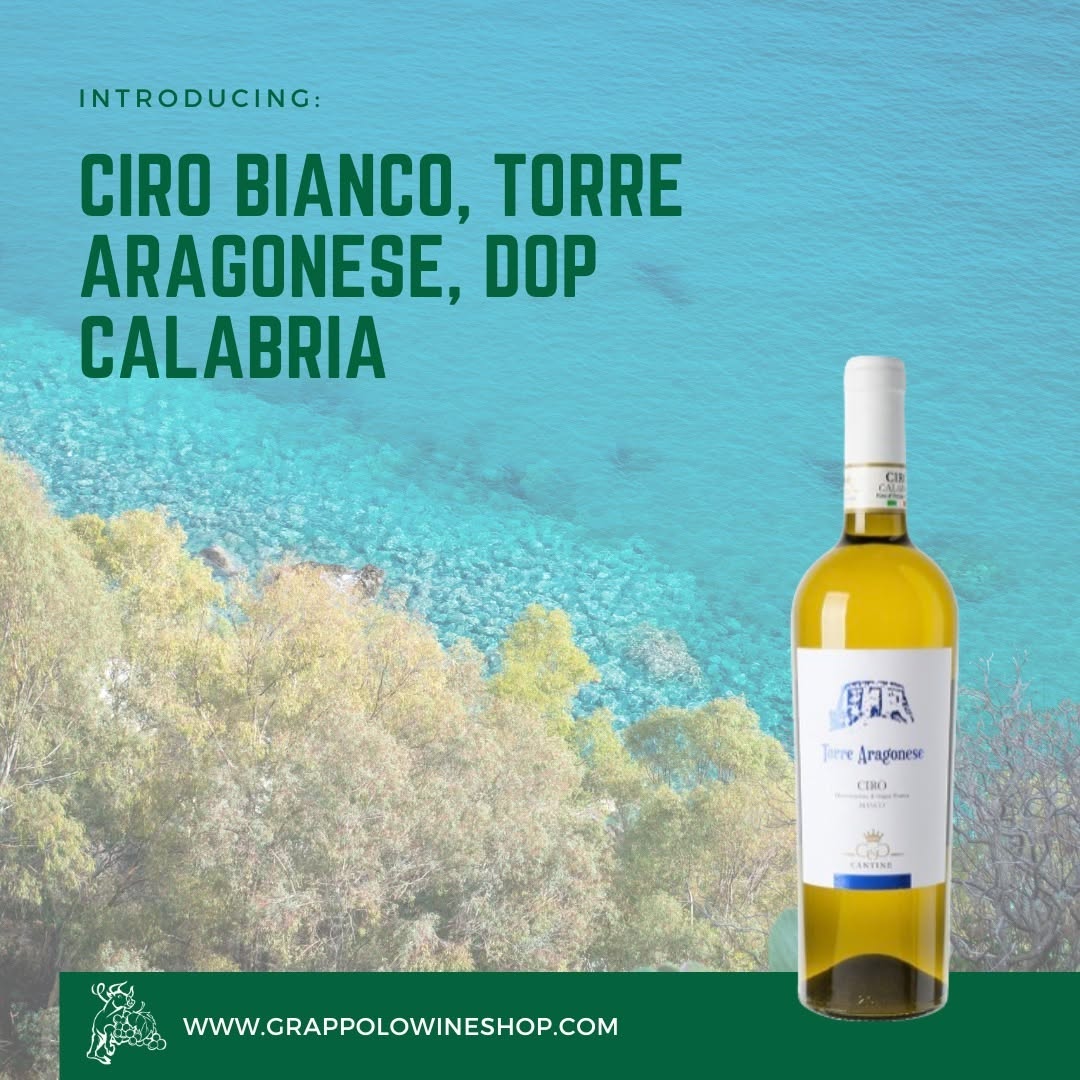
Bring the taste of Cirò to your own table with the wines of Torre Aragonese, available through Grappolo Wine Shop. From the elegant 2018 Cirò Rosso Classico Riserva to the fresh Cirò Rosato and Cirò Bianco, these are wines made to showcase the native grapes and character of Calabria.
Ready to taste Cirò for yourself?
Shop our Calabria wines online and use code CALABRIA at checkout for a special 15% discount and 24-hour shipping.
Open a bottle, pour a glass, and bring a little Calabria home.
Salute!
Try the Wine, 24hr Shipping:
CALABRIA WINES SELECTION
Tonight, I’ll probably open something simple. Maybe from the south.
Something that reminds me why I started doing this in the first place.