HOW WINE IS MADE — PART 1
Harvest Day: From the Vineyard to the Crush
There is a particular feeling I get every year when harvest approaches.
The vineyard starts to change. The grapes are no longer simply growing on the vines. You begin looking at them differently. You walk between the rows, you taste a few berries, you look at the color of the skins, you feel the texture, you look at the seeds.
And eventually you start asking yourself the question that every winemaker has been waiting for:
Are we ready to pick?
I am writing this from far North Texas, where I am currently working with Texas-grown grapes and putting my Italian winemaking experience to work in a completely different environment.
For me, this is particularly interesting.
I was trained in Italy, where wine has been made for thousands of years and where every region has developed its own relationship between grape, soil and climate. Here in Texas, the conditions are very different. The heat is different. The rain is different. The soil is different. The way the vine reacts to the season is different.
So I don't come to Texas trying to make these grapes behave like grapes from Italy.
I bring the knowledge from Italy, but I listen to what the Texas vineyard is telling me.
And that starts long before harvest day.
Harvest actually begins weeks before you pick a grape
People sometimes imagine harvest as one day when everyone goes into the vineyard with baskets and starts picking grapes.
In reality, the harvest decision can take weeks.
As the grapes approach maturity, I start paying closer attention to what is happening in the vineyard. I taste the berries regularly. I take samples. I look at the numbers, but I never let the numbers make the decision by themselves.
One of the first things we measure is sugar, usually expressed as Brix. This gives us an idea of the potential alcohol the grapes can produce during fermentation.
But sugar is only one piece of the puzzle. I also want to know what is happening with the acidity and the pH. These will have a major influence on the freshness, balance and stability of the finished wine.
And then there is something that no laboratory instrument can completely replace:
I taste the grape.
I want to know if the fruit tastes ripe. I want to know what the skins are telling me. I look at the seeds and taste them. Are they still green and bitter, or are they becoming more mature? Does the fruit taste fresh? Does it have concentration? Does it have the character I am looking for?
Because ultimately, I am not making Brix. I am making wine.
The weather is part of the winemaking team
One of the biggest lessons you learn as a winemaker is that you are never completely in control.
You can control many things in the winery, but you cannot control the weather.
And the weather is one of the most important factors in determining what happens to the grape.
A hot season can accelerate ripening. Rain close to harvest can create completely different problems. Temperature affects the development of sugars, acids and aromas. Even the time of day when you pick can make a difference.
This is especially important here in Texas. When you are dealing with high temperatures, I pay very close attention to the condition and temperature of the fruit coming into the winery. Whenever possible, working during the cooler hours is a big advantage.
The goal is simple: bring healthy, intact grapes into the winery as quickly as possible.
The less time they spend sitting around warm and damaged, the more control we have over what happens next.
Harvest Day
Eventually, after all the tasting, sampling, analyzing and looking at the weather forecast, the day comes.
We pick. For me, this is always a special moment. There is a certain excitement in seeing the fruit that you have been watching for months finally coming into the winery.
But there is also pressure. Because from this point forward, every minute matters. Grapes are not like a bag of flour sitting on a shelf. They are living fruit. They contain sugar, water, acids, nutrients and microorganisms. Once the berries are picked and especially once they are damaged, the clock starts moving.
This is why I want the grapes transported carefully and quickly. A crushed grape sitting in the heat is already beginning to change. And I don't want the heath and air to start making decisions for me.
I want the winemaker to make the decisions.
Then the grapes enter the winery
When the grapes arrive, we have a beautiful-looking mess.
Whole clusters, berries, stems, leaves, everything that came from the vineyard is now sitting in front of us. This is where we begin separating what we want from what we don't.
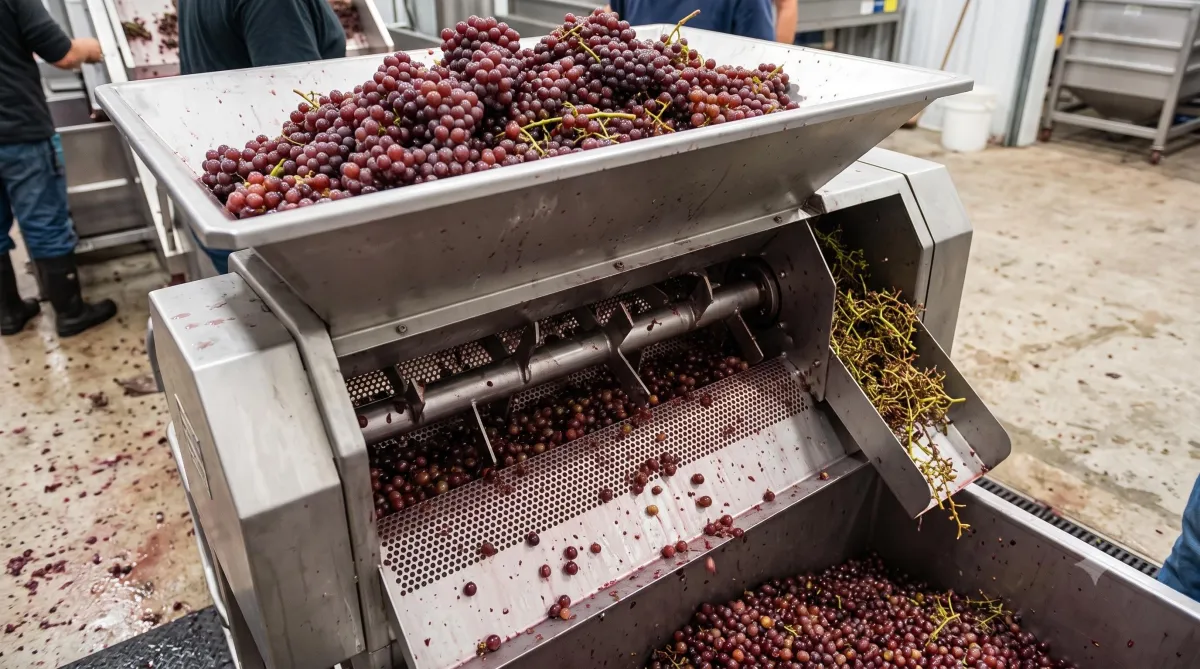
One of the first steps can be destemming.
The stem is the green structure holding the berries together. A destemmer separates the berries from those stems before or during the crushing process, depending on the equipment and the style of winemaking we choose. And this is where winemaking becomes much more interesting than simply following a recipe.
Because I don't automatically believe that every grape needs to be treated exactly the same way. Sometimes stems can be useful. They can contribute structure and affect the way a wine ferments. In some styles, whole-cluster or partial whole-cluster fermentation is intentional.
But stems can also bring green, bitter or harsh tannins if the fruit and stems are not sufficiently mature. So again, I look at the fruit.
The grape tells me what it needs.
Crush: A very misunderstood word
When people hear the word “crush,” they imagine crushing the grapes into a paste.

That is not what I want. The crushing process should be gentle. We want to open the berry enough to release the juice, but we don't want to destroy everything inside it. Think of it almost like opening the door rather than knocking down the house.
Once the berry is opened, the juice comes into contact with the skins and the rest of the grape material. Now we have what winemakers call must.
And from this moment, we are entering a completely different phase. The grape has gone from being a fruit growing on a vine to becoming the raw material from which wine will be made.
For a red wine, the skins will remain with the juice during fermentation and maceration, allowing us to extract color, aromas and tannins.
For a white wine, the approach is usually very different because we generally want to separate the juice from the skins much earlier.
The decisions we make at this point will influence everything that comes later.
Why gentle handling matters
There is a phrase I often use when I talk about winemaking:
You cannot put the grape back together.
Once you have crushed it too aggressively, broken the seeds, damaged the stems or allowed the fruit to oxidize, you cannot reverse that decision. The seeds, for example, contain tannins that can become unpleasant if they are aggressively broken. The stems contain compounds that can contribute to the wine, sometimes positively, sometimes negatively.
And oxygen can be either a friend or an enemy depending on when and how we use it. This is why the machinery in a winery is not simply there to make our job easier. It is there to help us control the way the grape is treated.
A good destemmer and crusher should respect the fruit.
The Italian lesson I brought to Texas
Working with Texas grapes has made me think a lot about what it really means to be a winemaker.
When I was trained in Italy, I learned the importance of tradition, but I also learned something perhaps even more important: tradition is knowledge, not a set of rules.
You learn why something is done. Then you decide whether it makes sense for the fruit in front of you. That is exactly how I approach Texas. I am not trying to reproduce an Italian wine here. I am trying to understand what this land, this climate and these grapes can give me.
Then I use everything I know—from Italian winemaking, from chemistry, from experience and from simply tasting the fruit—to guide that potential toward the bottle.
That is what makes winemaking so fascinating to me. Every harvest is a conversation between the vineyard and the winemaker. And the vineyard always gets the first word.
The harvest is only the beginning
At the end of harvest day, when the grapes have been picked, transported, sorted, destemmed and gently crushed, I know that the easy part is over.
Now the must is sitting in the winery.
The sugar is there. The natural acids are there. The skins, seeds and juice are together. And soon, something remarkable is going to happen.
The yeast will begin converting sugar into alcohol. That is when the grape really starts becoming wine.
And that will be the subject of Part 2 of my “How Wine Is Made” diary: Fermentation, Yeast & Maceration.
For now, I am going back to the vineyard. There are still grapes to taste.
And there is still one very important question to answer: Are they ready?
From My Winery to Your Table
We spend so much time talking about the vineyard because great wine starts there. If you want to taste what happens when native Italian grapes, terroir and careful winemaking come together, discover our Calabria Wine Treasures 6-Bottle Bundle, six award-winning wines showcasing the character of Southern Italy, including Greco Bianco, Pecorello and Gaglioppo. A little taste of Calabria, from my winery to your table.

Try the Wine, 24hr Shipping:
6 Pack Discover Calabria Bundle
Invite us to your Party!
We'll Make it a great wine Experience!
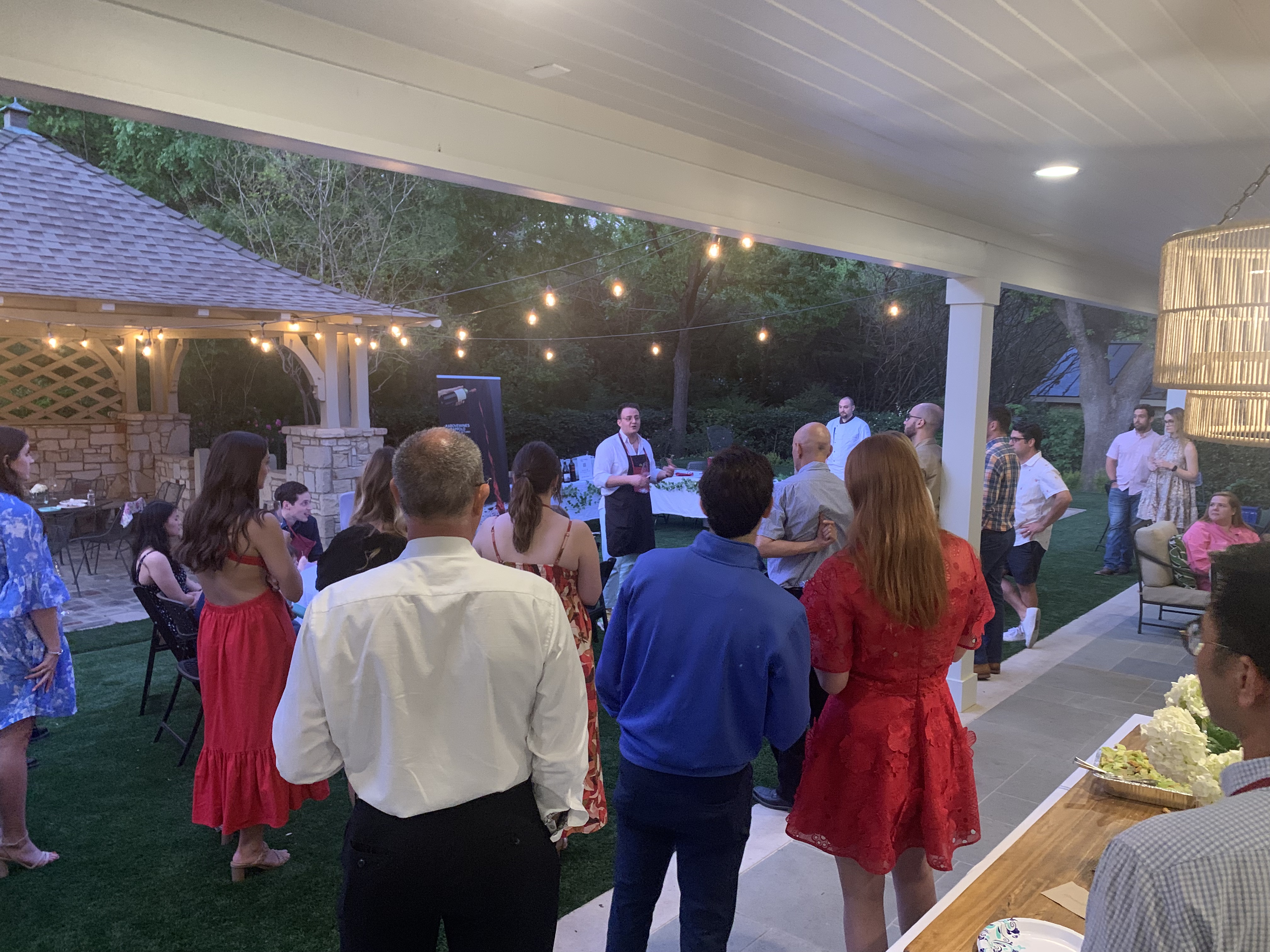
If reading this made you think about your own gathering, even just a small dinner with friends, a birthday, a team night, or simply an excuse to bring people together, then I would genuinely love to hear from you.
There is no pressure with us. No obligation. No complicated process. Just a conversation.
We’ll talk about what you have in mind, the kind of atmosphere you want, the people you’re inviting, and we’ll build something around that. It can be as relaxed as friends sitting around a couch with pizza and wine, or as elegant as a multi-course dinner with full service. Most of the time, the best events are the ones that feel the most natural to you.
My team and I take care of everything, but more importantly, we make sure it feels like your evening, not a scripted event, not a performance, just something real, warm, and memorable.
So if you’re curious, even slightly, reach out.
We’ll be happy to chat, share ideas, and help you understand what’s possible.
And if it doesn’t feel like the right fit, that’s completely okay too. Wine should never feel forced.
But if it does come together, I can promise you one thing from my heart:
we will create something people will remember for a long time.
CLICK TO FIND OUT MORE ABOUT
OUR PRIVATE EXPERIENCES
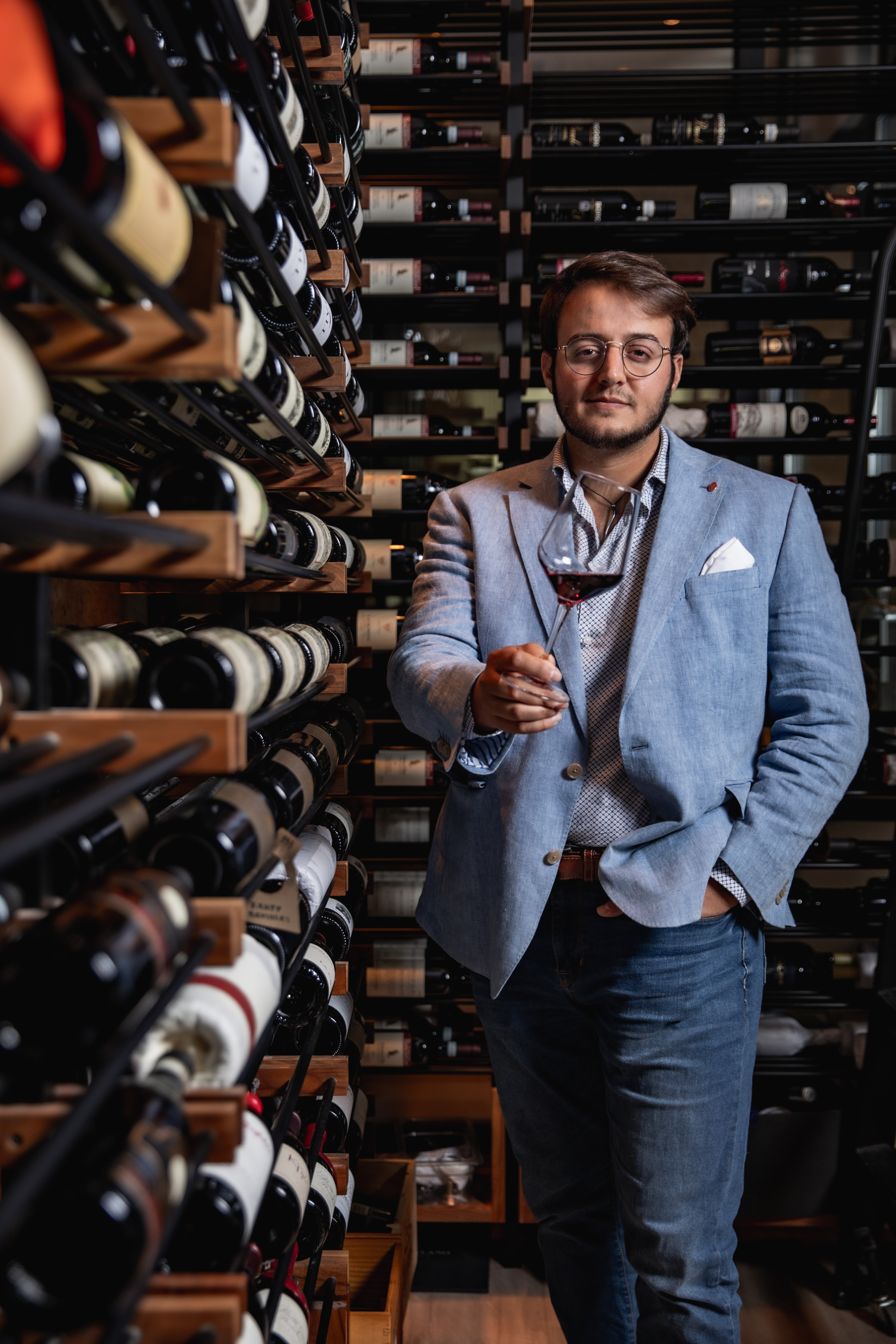
Tonight, I’ll probably open something simple. Maybe from the south.
Something that reminds me why I started doing this in the first place.