
Saving Italy’s Lost Grapes: The Story Behind the Wines You’ve Never Tasted
The Future of Wine Is Hidden in Italy’s Forgotten Grapes
That Moment in the Glass
There’s something I notice all the time during our tastings.
Someone takes a sip, pauses for a second, looks at the glass… and then looks back at me and goes, “Wait… what is this?”
And I already know what’s happening. It’s not confusion in a bad way. It’s curiosity.
Because it doesn’t taste like anything they’re used to. And most of the time, I tell them the same thing: it’s a grape you’ve probably never heard of...
More Than Cabernet and Chardonnay
We’ve all gotten used to the same names. Cabernet. Chardonnay. Pinot Noir. They’re everywhere... restaurants, shops, wine lists and they’ve kind of shaped what we expect wine to taste like.
But here’s the part that still surprises people every time: Italy alone has over a thousand native grape varieties.
Not clones. Not small variations. Completely different grapes, each with its own identity, its own personality, its own story tied to a very specific place.
And the crazy part? A huge number of them almost disappeared.
The Vines That Almost Vanished
I’m not talking about something that happened centuries ago.
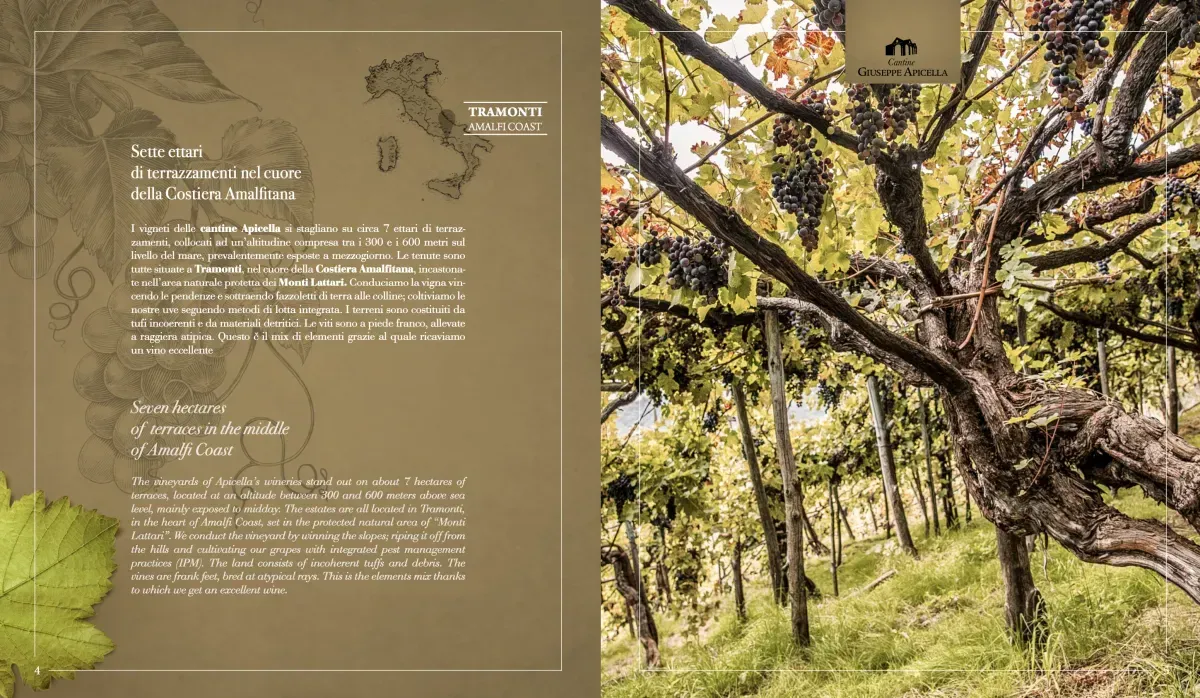
I’m talking about vines that were still alive not long ago… growing quietly in old vineyards, behind houses, along stone walls, in places no one was really paying attention to anymore. If you travel through Italy, not the big cities, but the smaller villages, you start to see it.
A 70-year-old vineyard that was never replanted.
A single vine climbing up the side of a house.
A farmer who kept a few rows “just because that’s what we’ve always had.”
And when you ask about it, there’s always a story behind it.
“Questo lo faceva mio nonno.”
“My grandfather used to make this.”
No branding. No distribution. No strategy.
Just tradition… and someone choosing not to let it disappear.
The People Who Protected Them
What’s incredible is that a lot of what we’re rediscovering today exists because of those exact people.
Not big companies. Not trends. Not markets. But farmers, families, and small communities who sometimes without even realizing it became the custodians of something incredibly rare.
Because once a grape disappears… that’s it. There’s no backup. You can’t recreate it in a lab. You can’t reverse-engineer it. You can’t just “plant it again.” It’s a genetic story that took centuries to develop, shaped by climate, soil, and human hands and once it’s gone, it’s gone forever.
The Great Rediscovery
Over the last years, something really interesting has been happening in Italy.
People started going back. Winemakers. Researchers. Agronomists. Even photographers and storytellers. Traveling thousands of kilometers across the country, from the Alps all the way down to Sicily, looking for these forgotten vines. Studying them. Identifying them. Sometimes discovering varieties that weren’t even officially recorded.
And not just cataloging them but actually vinifying them. Bringing them back into the glass. In some cases, from just a handful of surviving plants. Think about that for a second. Entire wines… reborn from almost nothing.
Why This Matters Today
And here’s where it becomes even more interesting for us.
Because this isn’t just about preserving the past. It’s about shaping the future. One of the biggest challenges in wine right now is climate. Warmer temperatures, changing conditions, earlier harvests.
And what many people are starting to realize is that some of the answers might already exist hidden in these native varieties. Grapes that have adapted over centuries to very specific environments. Grapes that can handle heat differently. Grapes that naturally retain freshness, acidity, balance.
Instead of forcing vineyards to adapt to a few international varieties… these grapes already belong exactly where they are.
The Wines That Surprise You
But beyond all the technical side, there’s something much simpler. They make wine exciting again. Because when you open a bottle made from one of these grapes, there’s no reference point.
You’re not comparing it to something else. You’re not thinking, “this should taste like…” You’re just experiencing it. And that’s something I feel we’ve lost a little bit.
We’ve been taught what to expect from wine. What’s “correct.” What’s “better.” What’s “premium.”But these wines don’t really follow those rules. They’re more honest than that.
More Than Just a Wine that’s at Risk
There’s also something else I’ve been thinking about more and more.
When you drink one of these wines, you’re not just tasting a grape. You’re tasting the decisions of people who came before us. Generations of farmers who selected those vines, kept them alive, adapted them, believed in them long before any of us were here talking about wine.
That’s why biodiversity in wine isn’t just agricultural. It’s cultural. It’s history. It’s identity. And today, I think this matters more than ever. Because the risk we’re facing isn’t just losing grapes.
It’s losing diversity. Losing character. Losing the differences that make wine so interesting in the first place. Everything starts to taste the same if we’re not careful.
And that would be a shame, especially when we know how much is still out there.
So… What Are You Drinking Next?
So next time you’re choosing a bottle, I’d say this, don’t go for the safest option.
Go for the one that makes you pause for a second. The one you don’t recognize. The one you can’t pronounce. Because chances are, behind that name, there’s a story. A vineyard that almost disappeared. A family that kept it alive. A grape that somehow made it through.
And those… are always the wines worth discovering. And honestly, those are the ones I get most excited to share with you.
Start Your Journey with Us
So if this got you thinking… and you’re curious to start exploring these wines in a real way not just reading about them, but actually tasting them.
we put something together for you.
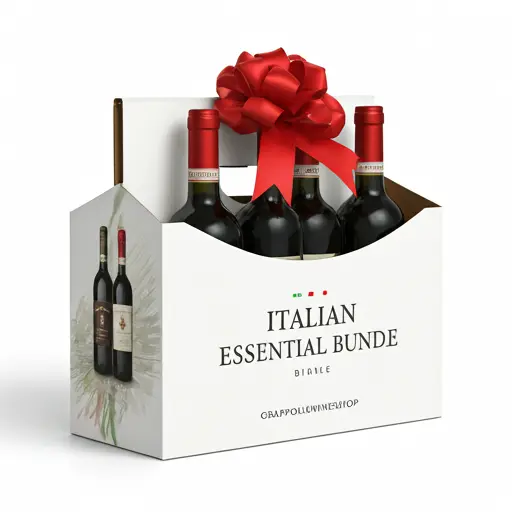
It’s our Italian Essentials Wine: Your First Selection: a case designed exactly for this.
Not overwhelming. Not too niche.
Just a really well-balanced introduction to what Italy has to offer.
Inside, you’ll find six wines that each tell a different part of the story:
Try the Wine, 24hr Shipping:
Italian Essential Wines, 6 Pack
A bold Super Tuscan that brings richness and structure.
A vibrant Rosso di Montalcino with that classic elegance and freshness.
A Chianti Riserva that feels like Tuscany in a glass, earthy, balanced, timeless.
A Calabrian red blend that’s a little deeper, with a touch of spice and a smooth finish.
A Nero di Troia Rosé that surprises you with character and depth.
And a crisp Cirò Bianco, fresh, citrusy, and incredibly easy to enjoy.It’s not just about the wines themselves it’s about understanding how different regions, grapes, and traditions come together across Italy.
We also included a few things to make it even more approachable:
Simple pairing ideas so you can actually enjoy these wines with food, not overthink them.
And short videos where I walk you through each bottle, sharing a bit more of the story behind them.