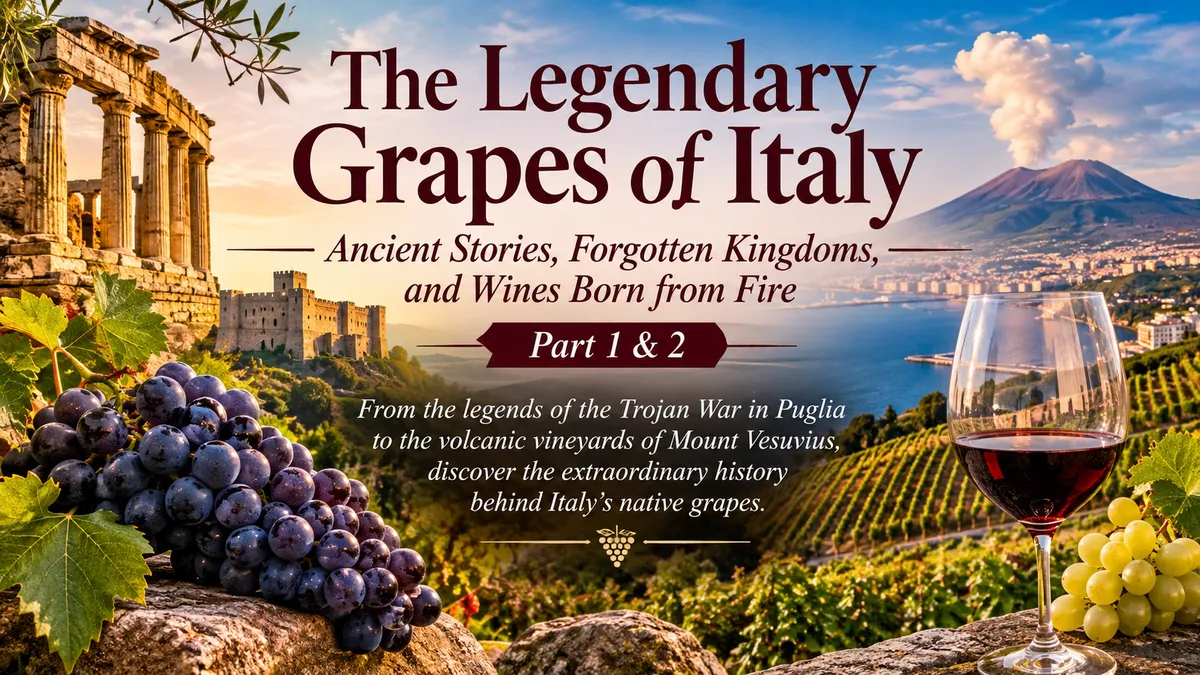
The Legendary Grapes of Italy: Part 1
Ancient Stories, Forgotten Kingdoms and Wines Born from Fire – Part 1
From the legends of the Trojan War in Puglia to the volcanic vineyards of Mount Vesuvius, discover the stories behind some of Italy's most fascinating native grapes.
There is something extraordinary about Italian wine that goes far beyond what we find in a glass.
Italy is home to hundreds of native wine grape varieties, many of which have been cultivated for centuries. Behind their names are stories connecting ancient civilizations, Greek mythology, Roman emperors, medieval kingdoms, and landscapes that have shaped Italian culture for generations.
Some grapes carry the names of ancient cities. Others are connected to legendary heroes or powerful families. Some have survived wars, diseases, changing climates, and the disappearance of entire civilizations.
But perhaps the most fascinating thing about Italian native grapes is that they are not simply historical artifacts. They are living pieces of history.
Their identity is deeply connected to the places where they have been cultivated, the people who have cared for them, and the environmental conditions that have shaped their development over generations.
At Above Wines, this is one of the reasons we love introducing people to lesser-known Italian varieties. Every bottle gives us an opportunity to discover not just a wine, but a piece of Italy.
Today, let's travel to two fascinating territories in Southern Italy: Puglia, home of Nero di Troia, and the volcanic landscape surrounding Mount Vesuvius in Campania.
1. Nero di Troia: A grape born from the legends of the Trojan War?
Few Italian grape varieties have a name as evocative as Nero di Troia.
The name immediately brings to mind the ancient city of Troy, the Trojan War, and the stories immortalized by Homer.
According to one fascinating local legend, after the fall of Troy, the Greek hero Diomedes sailed across the Adriatic Sea and eventually reached the shores of Puglia.
Diomedes is traditionally associated with the Gargano area and the ancient Daunia territory. Legend says that he brought grapevine cuttings from his homeland and planted them near the Ofanto River, where they found the perfect conditions to grow.
Over generations, these vines became associated with the territory and eventually with the grape we know today as Uva di Troia, or Nero di Troia.
Is this historically proven? Not exactly.
There are different theories about the origins of the grape and its name. Some connect it to ancient Troy in Anatolia, others to the Apulian town of Troia, near Foggia.
What is certain is that Nero di Troia has deep roots in northern Puglia and has become one of the region's most recognizable indigenous red grapes.
Its history also crosses the medieval period.
Frederick II of Swabia, the Holy Roman Emperor who made Southern Italy one of the great cultural centers of medieval Europe, was associated with the appreciation of the wines of this territory. The cultivation of Nero di Troia subsequently became increasingly important in areas around Foggia, Barletta, Andria, and Castel del Monte.
What makes Nero di Troia special?
Nero di Troia is known for its dark skin, substantial tannins, and ability to produce structured wines.
Depending on its growing conditions and winemaking approach, it can offer:
Deep ruby to almost purple-black color.
Pronounced tannins and excellent structure.
Dark cherry, blackberry, and plum aromas.
Spicy and sometimes floral characteristics.
Remarkable aging potential.
Its relatively thick skin and late ripening make the growing season particularly important. The grape needs sufficient time and warmth to reach full phenolic maturity.
This is where the territory becomes essential.
Northern Puglia offers Mediterranean sunshine, warm and dry summers, limestone-rich soils, and significant differences in elevation and local climate.
The result is a grape that can express the character of its territory with remarkable personality.
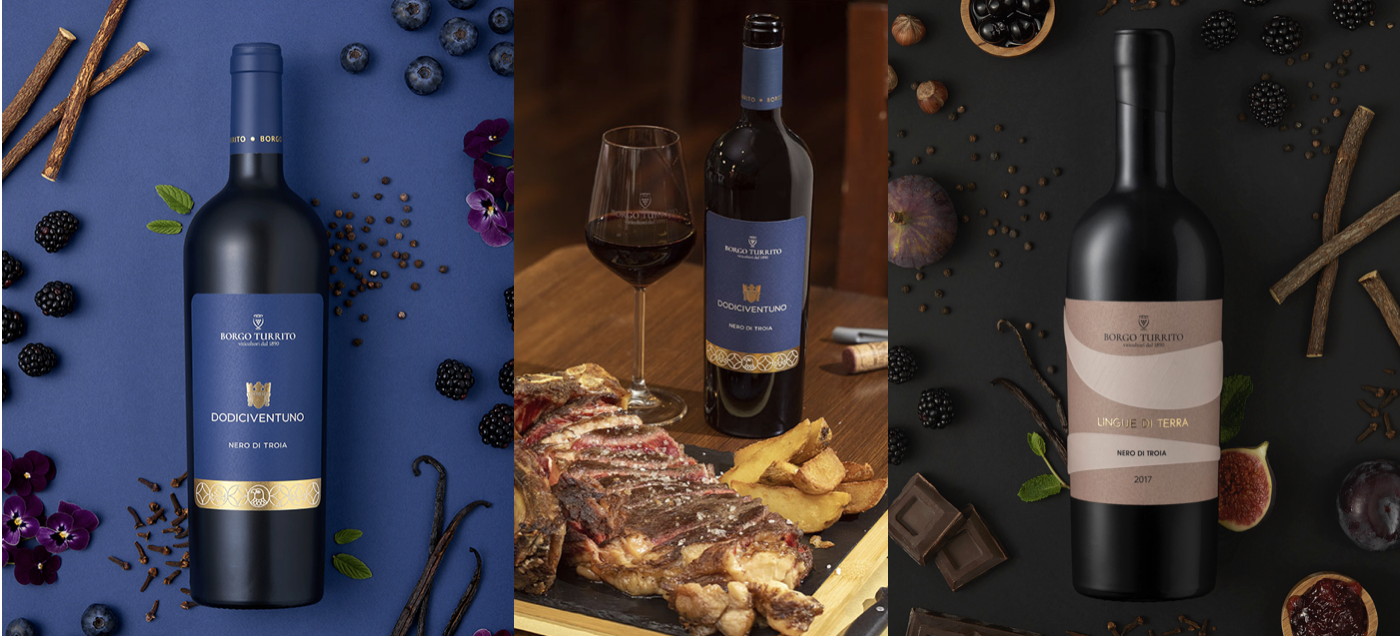
Discover Nero di Troia with Borgo Turrito
One of the reasons we are proud to carry wines from Borgo Turrito is the opportunity to introduce people to grapes that are deeply connected to their own territory.
Their Nero di Troia is an invitation to discover a different expression of Puglia.
Rather than relying on internationally famous varieties, we can explore what happens when a native grape is allowed to express its own identity.
When you pour a glass of Nero di Troia, you are not simply tasting a full-bodied southern Italian red. You are discovering a grape associated with ancient legends, medieval history, and generations of viticultural knowledge.
And that is exactly what makes indigenous varieties so interesting.
2. Mount Vesuvius: Where volcanic fire created one of Italy's most legendary wine territories
Moving west, toward the Gulf of Naples, we find a completely different landscape.
Mount Vesuvius.
One of the world's most famous volcanoes, Vesuvius is remembered for the catastrophic eruption of 79 AD, which buried the Roman cities of Pompeii and Herculaneum.
But long before that eruption, this area was already an important agricultural and viticultural territory.
The Romans understood the potential of the volcanic landscape and cultivated vines across the surrounding countryside.
Archaeological discoveries, including frescoes, amphorae, and other agricultural evidence from Pompeii and Herculaneum, demonstrate how deeply wine was integrated into daily life in this region.
Wine was not simply something people drank. It was part of trade, celebrations, religion, and everyday Roman culture.
The volcanic landscape that once threatened entire cities also helped create an extraordinary agricultural environment.
The legend of Lacryma Christi: The tears of Christ
There is perhaps no better example of Italian wine folklore than Lacryma Christi del Vesuvio.
Translated literally, the name means Tears of Christ.
According to local legend, when God saw the beautiful Gulf of Naples, He recognized a piece of paradise that Lucifer had torn away and taken to Hell.
Overcome with sadness, He wept.
Where His tears fell upon the slopes of Vesuvius, vines began to grow, producing the wine that would become known as Lacryma Christi.
It is a beautiful story, and like many Italian wine legends, it blends religion, geography, and the imagination of generations of people who lived among these vineyards.
The ancient Romans also celebrated the wines of this territory. The poet Martial famously wrote about Bacchus loving these hills, comparing them favorably with the legendary hills of Nysa.
The relationship between Vesuvius and wine is therefore not a modern marketing invention. It is part of a much older agricultural tradition.
What does a volcano do to a vineyard?
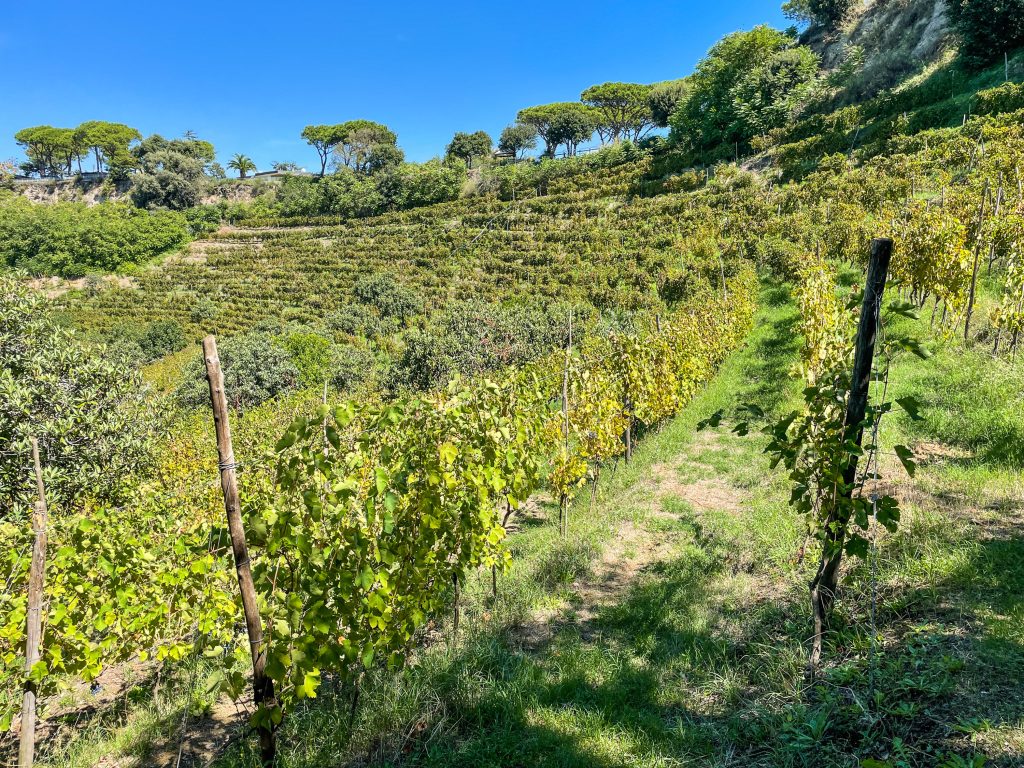
The slopes of Vesuvius contain different volcanic materials, including ash, pumice, and other deposits accumulated through thousands of years of eruptions.
These soils can be sandy, porous, and highly variable depending on the vineyard's position and geological history.
Their physical characteristics influence how water drains, how roots develop, and how vines interact with their environment.
The altitude, exposure, sea breezes, Mediterranean sunshine, and temperature variations add further complexity.
It is important to understand that volcanic soil does not simply transfer a particular mineral flavor directly into wine. Instead, geology influences the vine's growing conditions, which in turn influence grape development, acidity, ripening, and ultimately the character of the wine.
The result is a distinctive viticultural environment that has supported generations of local grape varieties.
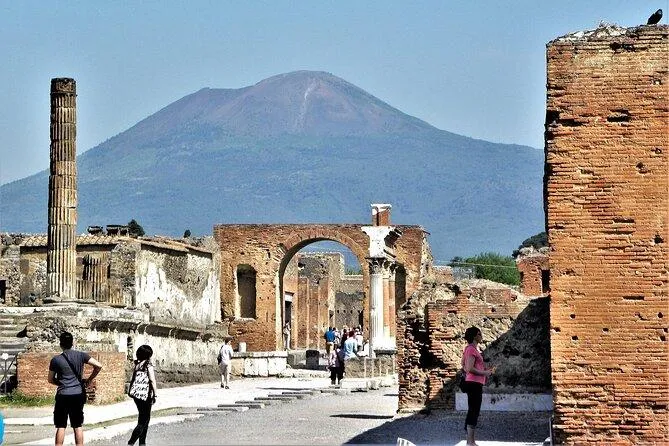
The grapes of Vesuvius
Among the interesting native varieties associated with the Vesuvian territory and surrounding Campania are:
Falanghina
One of Campania's most recognizable white grapes, known for freshness, citrus characteristics, floral aromas, and versatility.
Caprettone
A historic white grape associated with the Vesuvian territory, particularly important in the production of traditional Lacryma Christi Bianco.
Piedirosso
A native red grape whose name means red foot, referring to the reddish color of the vine's lower branches. It can produce fresh, aromatic wines with red fruit, floral notes, and characteristic earthy or spicy nuances.
Aglianico
One of Southern Italy's great red grapes, known for its structure, acidity, tannins, and extraordinary aging potential. It is also important in other Campanian territories.
These varieties demonstrate how diverse the region's viticultural heritage really is.
At Above Wines, our relationship with Cantine Federiciane gives us the opportunity to bring people closer to the history and character of volcanic Campania through the wines we carry.
Every bottle is another opportunity to explore the connection between grape, landscape, and tradition.
3. Why these stories deserve to be tasted, not just read... JOIN OUR UPCOMING EVENT!
Reading about these grapes is fascinating. But tasting them while discovering their stories is an entirely different experience.
This Sunday, November 8, we are bringing these stories to Dallas with a special edition of our Italian wine experiences:
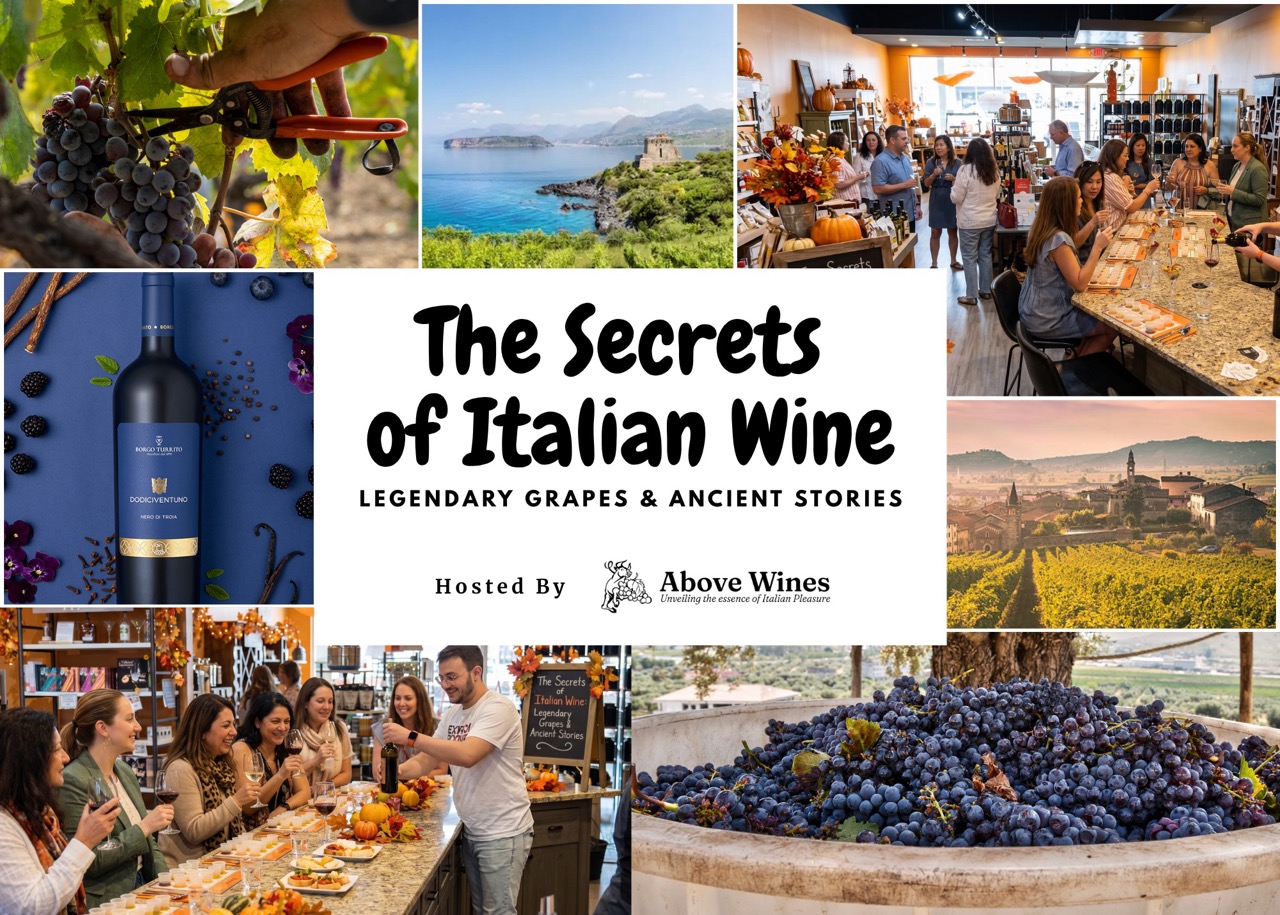
The Secrets of Italian Wine – Legendary Grapes & Ancient Stories.
Join me, Aldo Bove, for a 45-minute guided tasting session where we will explore four rare Italian wines, discover native grape varieties, and uncover the history, myths, and legends that make them so special.
Why did the ancient Greeks and Romans cultivate certain grapes in specific territories? What makes a grape like Nero di Troia so connected to the history of Puglia? How did the volcanic landscape around Vesuvius influence the wines of Campania?
These are some of the questions we will explore together.
This is not a traditional wine class filled with complicated terminology. It is an opportunity to travel through Italy using your senses, discovering the stories behind the grapes, the people, and the landscapes.
Event details
Date: Sunday, November 8, 2026
Location: Infused Oils & Vinegars, Dallas, Texas
Host: Aldo Bove, founder and winemaker at Above Wines
Experience: 45-minute guided tasting featuring four rare Italian wines
Small groups: Maximum 20 participants per session
Ticket: $15, with a special 2-for-1 promotion available
Event hours: 4:30 PM–9:00 PM
Whether you are already passionate about Italian wine or simply curious about discovering something new, this experience is designed to make you see wine differently.
Reserve your place here:
https://thesecretsofitalianwine.eventbrite.com/
I look forward to sharing these stories and raising a glass with you!
To be continued: Part 2 – Can a grape remember where it comes from?
Next week, we will go deeper into the science behind these fascinating varieties.
Can a vine actually change its DNA over generations? How do somatic mutations and epigenetics influence grapevine development? And how can centuries of cultivation, environmental pressure, and human selection create a grape that becomes exceptionally suited to its territory?
We will explore the fascinating relationship between genetics, nature, and terroir, and why preserving Italy's native grape varieties is more important than ever.
Because sometimes, the most interesting thing about a bottle of wine is everything that happened long before it was bottled.
Discover Italy one grape at a time. Discover Above Wines.
Shop our Calabria wines online and use code CALABRIA at checkout for a special 15% discount and 24-hour shipping.
Open a bottle, pour a glass, and bring a little Calabria home.
Salute!
Try the Wine, 24hr Shipping:
CALABRIA WINES SELECTION

Tonight, I’ll probably open something simple. Maybe from the south.
Something that reminds me why I started doing this in the first place.