

The Legendary Grapes of Italy: Part 2
Can a Grape Remember Where It Comes From? The Science of Italy's Ancient Vines – Part 2
How centuries of natural selection, genetic variation, and environmental adaptation have shaped the identity of Italy's native grape varieties.
Last week, we traveled through Southern Italy, discovering the legends of Nero di Troia in Puglia and the extraordinary volcanic wine territory surrounding Mount Vesuvius.
We explored the stories of ancient Greek heroes, Roman civilization, medieval emperors, and the vineyards that have survived generations of change.
But there is another question worth asking.
Why do certain grapes seem so perfectly connected to the places where they have been cultivated for centuries?
Why does Nero di Troia have such a recognizable identity in Puglia? Why have varieties like Falanghina, Piedirosso, and Caprettone remained so important in Campania?
Is it simply tradition, or is there something happening at a biological level?
The answer takes us into one of the most fascinating areas of modern viticulture: grapevine genetics and adaptation.
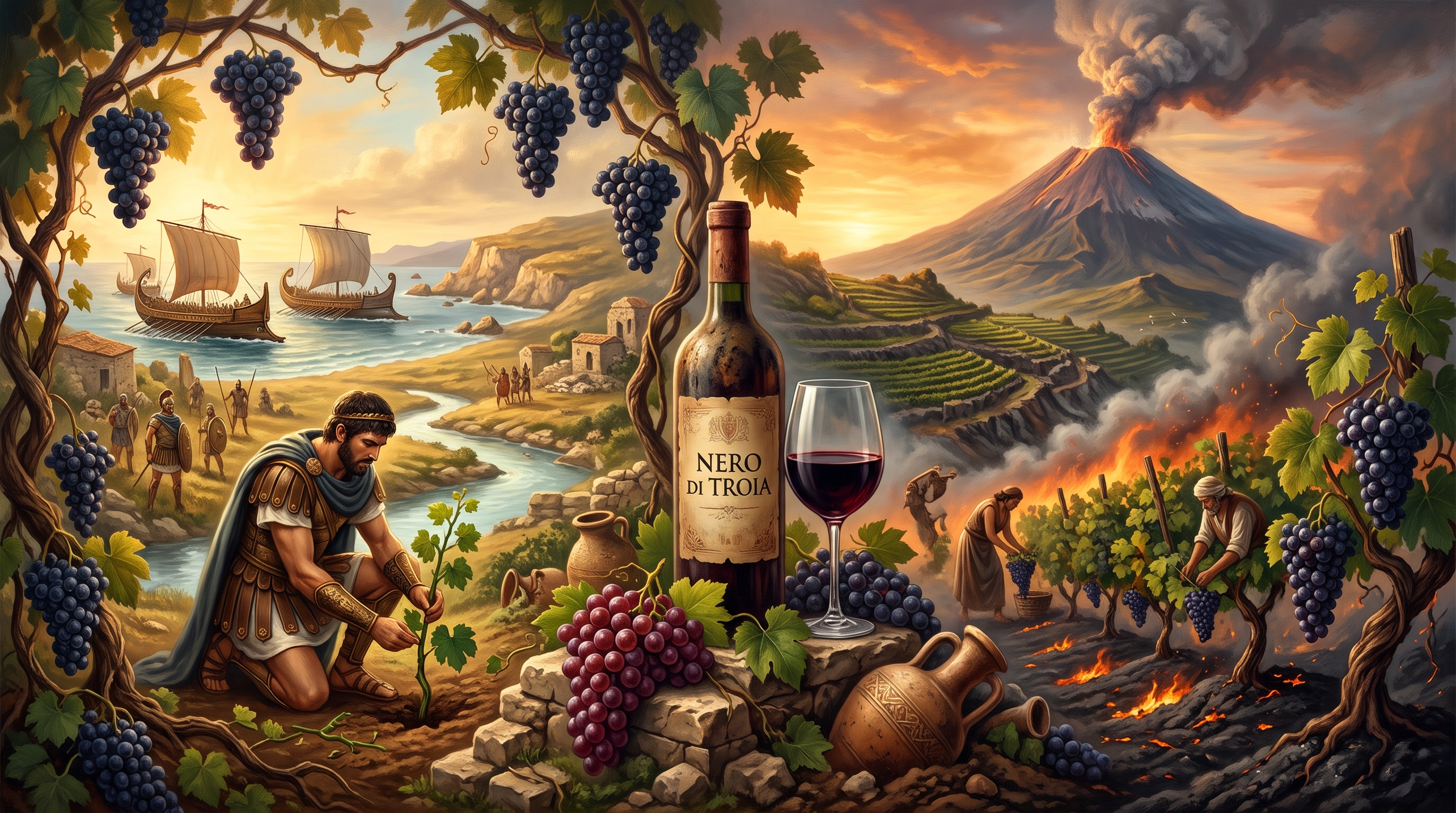
1. Can a grapevine actually change its DNA over time?
Imagine a grapevine planted hundreds of years ago.
Its descendants are propagated, replanted and cultivated by generations of farmers. They experience different summers, droughts, rainfall patterns, soil conditions, and temperatures.
Over time, could that vine actually change?
The answer is yes, although the science is more interesting than the simple idea that a plant rewrites its DNA to adapt.
Grapevines are perennial plants. Unlike annual crops, which complete their life cycle in a single growing season, a vineyard can remain productive for decades.
And there is another important characteristic: grapevines are generally propagated vegetatively.
When a grower wants to reproduce a particular variety, they do not normally plant its seeds. They take cuttings or graft material from an existing vine to preserve its varietal identity.
This means that generations of vines can descend from the same original genetic material.
But genetic identity does not mean absolute genetic uniformity.
2. Somatic mutations: Small changes accumulated over generations
As a vine grows and its cells divide, occasional mutations can occur in its DNA.
These are called somatic mutations.
Unlike mutations associated with sexual reproduction, somatic mutations occur within the plant itself and can sometimes be passed on when a particular branch or bud is used to propagate a new vine.
Over many generations of vegetative propagation, different lineages of the same grape variety can accumulate distinct genetic characteristics.
This is one of the reasons why Pinot Noir, for example, has so many different clones.
The grape variety remains Pinot Noir, but individual clones can display differences in berry size, yield, ripening, disease susceptibility and other characteristics.
The same principle helps explain the extraordinary diversity that exists within many old Italian grape varieties.
A grape is not necessarily one perfectly uniform genetic individual. It can contain a population of related but slightly different vines.
And that diversity is valuable.
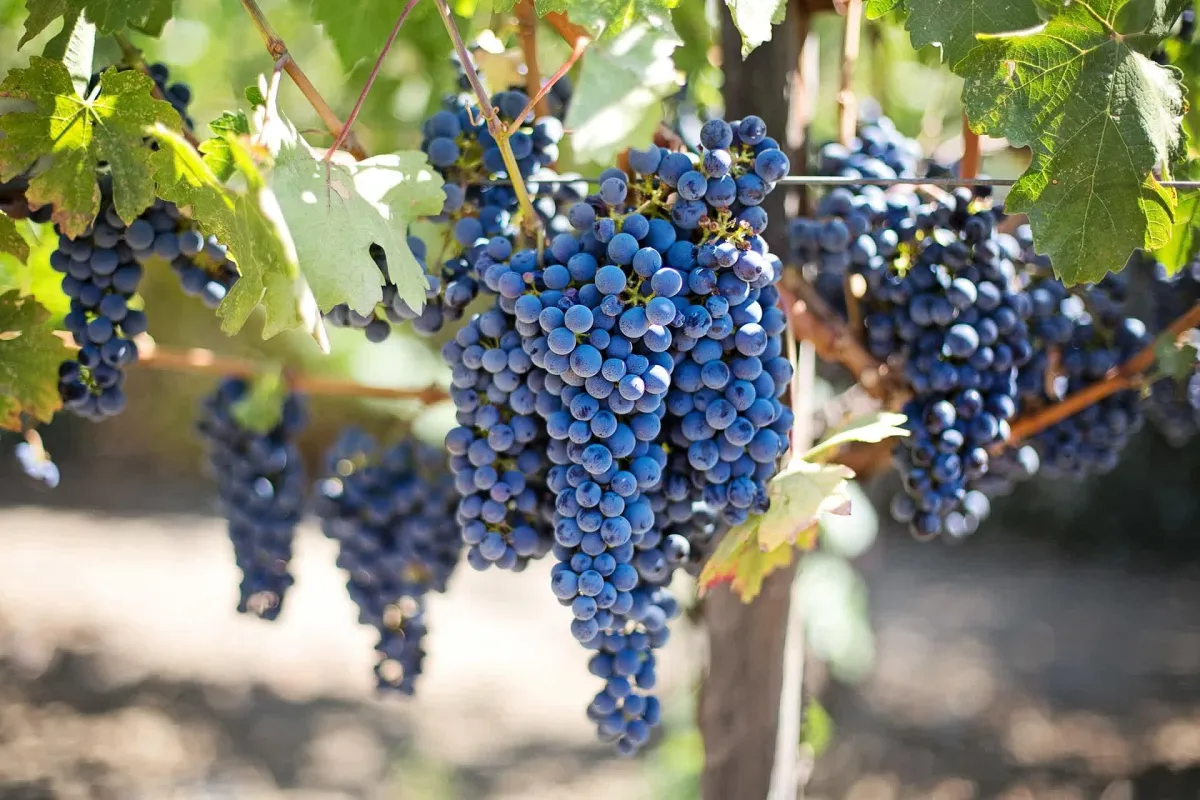
3. Epigenetics: When the environment influences how genes behave
There is another fascinating mechanism: epigenetics. Think of DNA as the instruction manual of a vine.
Epigenetics does not necessarily change the letters written in that manual. Instead, it influences how certain instructions are activated or silenced.
Environmental conditions such as heat, drought and other forms of stress can influence these regulatory mechanisms.
Some epigenetic modifications can persist through cell divisions and contribute to differences between grapevine clones.
This means that two vines with very similar genetic material can sometimes behave differently depending on their biological history and environmental conditions.
Research into grapevine genetics and epigenetics is still developing, but scientists are increasingly understanding how these mechanisms contribute to the diversity found within historic grape varieties.
4. Natural selection and the relationship between a grape and its territory
Does this mean Nero di Troia and Falanghina evolved specifically for their territories?
Not in the sense that a grape deliberately changes its DNA because it wants to survive in a particular location.
Evolution is not intentional.
Instead, natural genetic variation occurs over time. Farmers select vines that perform well, and those vines are more likely to be propagated and maintained.
Environmental conditions also influence which characteristics are advantageous.
Over many generations, this combination of natural variation, environmental pressures and human selection can result in grapevine populations exceptionally well suited to their local conditions.
Think about the differences between two territories.
In Puglia, Nero di Troia must contend with warm Mediterranean summers, seasonal drought, and the particular conditions of its growing areas.
Around Vesuvius, vines encounter a different combination of volcanic soils, elevations, exposure, rainfall patterns, and sea influences.
The grapes have different genetic backgrounds, but their individual histories of cultivation and selection are also part of their identity.
This is why preserving indigenous grapes is so important.
They represent not only agricultural heritage but also a valuable reservoir of genetic diversity.
A grape variety cultivated for centuries in a particular environment may carry a wealth of accumulated variation that could become increasingly important as the climate changes.
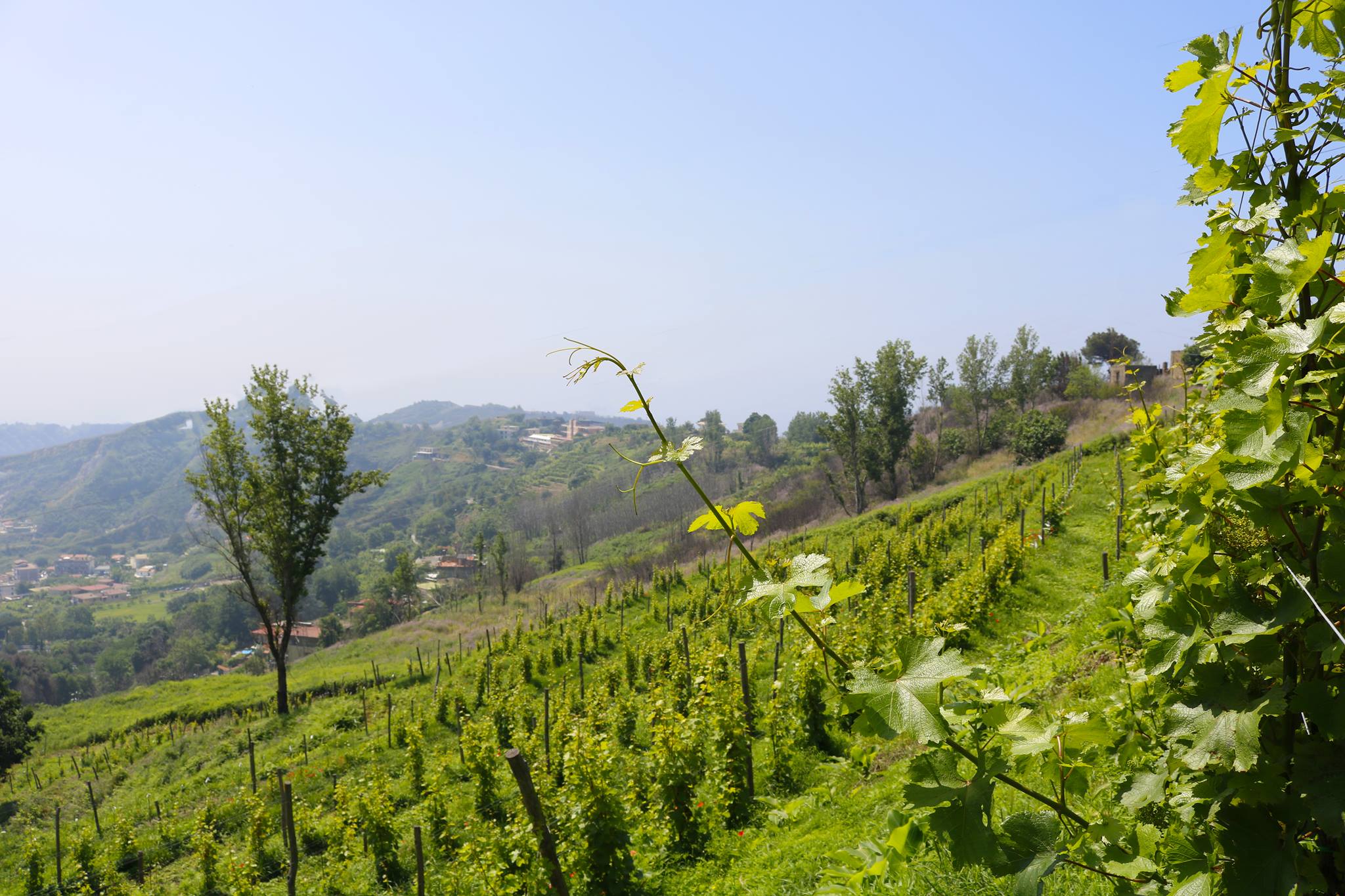
5. Terroir: More than soil, more than climate
We often use the French word terroir when discussing wine.
It is a word that is difficult to translate because it represents much more than soil.
Terroir includes geology, climate, topography, exposure, local ecosystems and the human decisions that have shaped a vineyard over time.
But there is another dimension worth considering: time.
A vineyard is not just a place where grapes grow. It is the result of a relationship between people, plants and the environment.
Think about the difference between a Nero di Troia grown in northern Puglia and a Falanghina cultivated in Campania. Both are southern Italian grapes. Both experience Mediterranean sunshine. Yet their environments, histories, genetic backgrounds and viticultural traditions are different.
Their wines tell different stories because the relationship between the grape and its environment is different. And this is what makes Italian wine so extraordinary.
We could plant an international grape variety in almost any suitable wine-growing region in the world. But we cannot simply recreate thousands of years of local viticultural history.
We cannot reproduce the exact genetic diversity of an ancient grape population, the accumulated knowledge of local growers, or the agricultural traditions that have been passed down through generations.
That is why native varieties deserve our attention. They are part of the identity of a place.
6. Why preserving Italy's native grapes matters more than ever
The wine industry is changing.
Climate change is bringing new challenges to vineyards around the world. Higher temperatures, longer periods of drought, unpredictable rainfall, and extreme weather events are forcing winemakers to reconsider how they cultivate their vineyards.
In this context, native grape varieties become particularly interesting. Some have naturally later ripening cycles. Others retain acidity under warm conditions or have characteristics that make them better suited to particular environments.
There is no single solution, and not every indigenous grape is automatically climate-resistant.
However, maintaining genetic diversity gives viticulture more possibilities when adapting to changing conditions.
Preserving native varieties means protecting a collection of genetic resources that future generations of growers and winemakers may need.
It also means protecting the cultural identity of territories that have built their relationship with wine over centuries.
7. Every bottle carries a history
At Above Wines, our philosophy has always been to look beyond the label.
When we introduce a Nero di Troia from Borgo Turrito, we are opening the door to the history of Puglia, the legends of Diomedes, and the extraordinary identity of one of Southern Italy's most interesting indigenous red grapes.
When we introduce wines from Cantine Federiciane, we bring people closer to the historic wine-growing traditions of Campania and its volcanic landscapes.
These wines remind us that wine is not simply an agricultural product.
It is the result of nature, science, human knowledge, and time working together.
The next time you open an Italian wine, take a moment to think about the vine.
Think about the generations of growers who selected and propagated it, the environmental conditions that shaped its development, and the genetic diversity that makes it what it is today.
A grape variety is not just a name on a bottle.
It is a living connection between the past, the present, and the future.
Discover Italy one grape at a time. Discover Above Wines.
Shop our Italian Tour Wine Selection online and get $20 off plus 24-hour shipping.
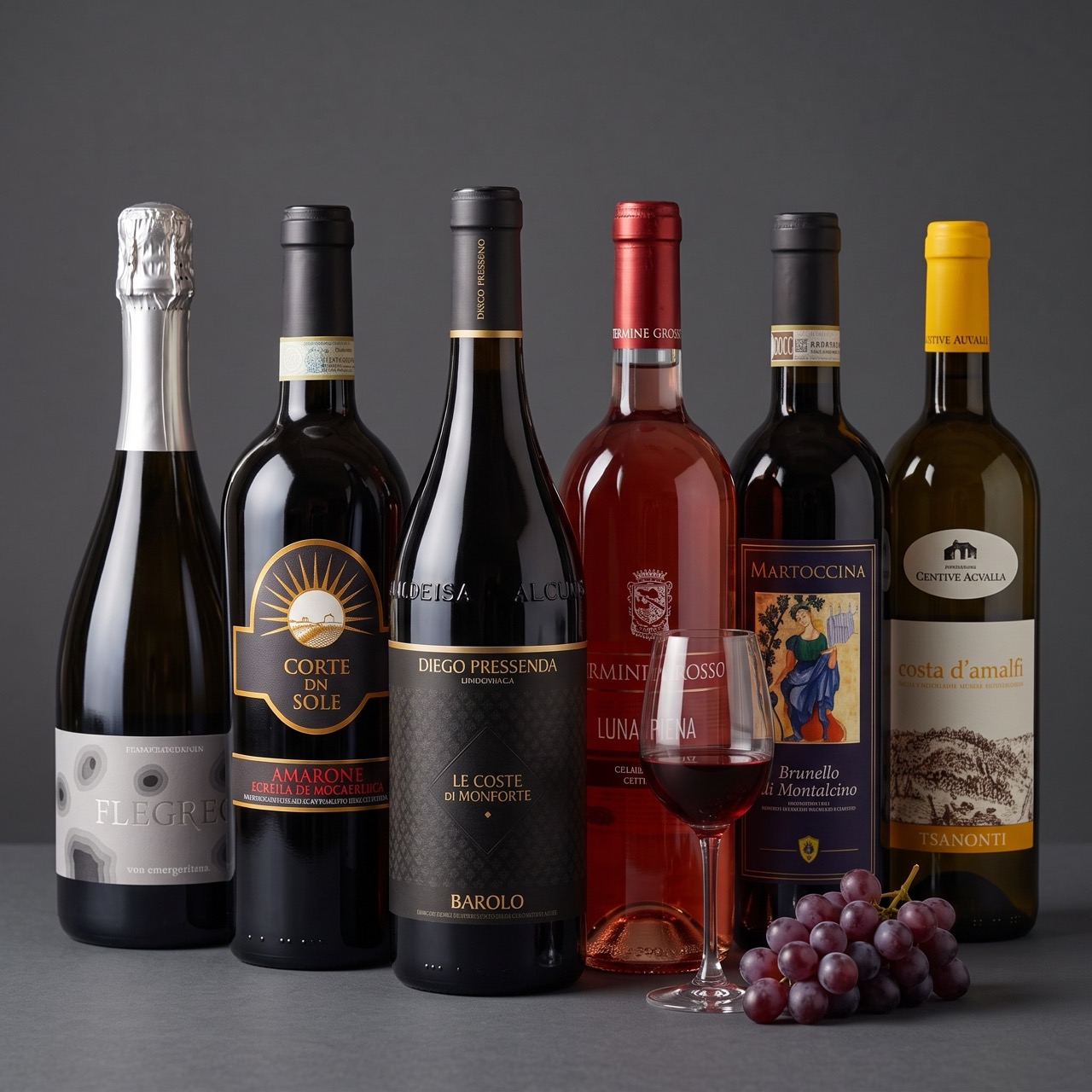
Open a bottle, pour a glass, and bring a little Italy home.
Salute!
Try the Wine, 24hr Shipping:
ITALIAN WINE TOUR SELECTION

Tonight, I’ll probably open something simple. Maybe from the south.
Something that reminds me why I started doing this in the first place.