
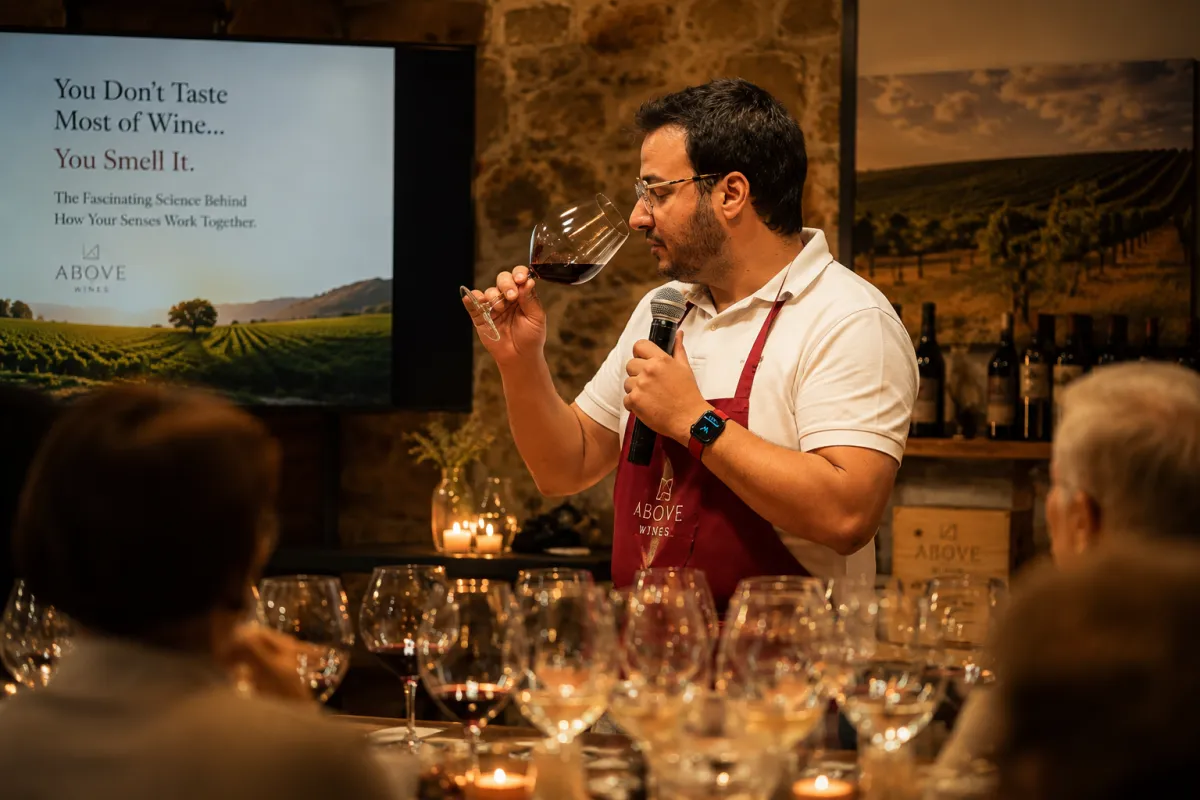
Think That Wine Is Sweet? Your Nose May Be Fooling You
Why Some Dry Wines Taste Sweet (Even When They Aren't)
One of my favorite moments during a wine tasting is when someone takes a sip of wine, smiles, and says, "I really like this one, it's nice and sweet." Sometimes they're absolutely right. Other times, I simply smile back and ask them another question:
"Are you sure it's actually sweet?"
That usually earns me a puzzled look. After all, if a wine feels sweet, surely it must contain sugar… right?
Well, not always.
As a winemaker, I spend a good part of my life tasting wines, but over the years I've realized that one of the most fascinating things about wine isn't found in the vineyard or in the cellar—it's inside our own heads. Our brains are incredibly good at interpreting information, but they're also remarkably easy to fool. Wine, perhaps more than any other beverage, takes full advantage of that.
Today I'd like to explain why this happens, because once you understand it, you'll never taste wine in quite the same way again.
Sweet Wine Is Sweet... But That's Not What We're Talking About
Before we dive in, I want to make one important distinction.
If you pour yourself a glass of Moscato, a late-harvest Riesling, an Ice Wine or any wine that genuinely contains residual sugar, your tongue will detect that sweetness whether you smell the wine or not. Sugar is one of the six fundamental tastes our taste buds are designed to recognize, and no experiment will make it disappear.
The wines I'm talking about are completely different.
I'm talking about those beautifully aromatic dry wines that sit right on the edge of seeming sweet. You know the ones I mean. Perhaps you've tasted a Viognier bursting with ripe peaches, a Gewürztraminer full of lychee and rose petals, or a fruity Sauvignon Blanc reminding you of tropical fruit. Many people are convinced these wines contain sugar simply because they feel sweet, yet laboratory analysis often shows they are technically dry.
So why does that happen?
Your Tongue Only Knows Six Basic Tastes
The answer starts with understanding what your tongue can actually do.
Most of us grow up believing we taste flavors like cherry, peach, lemon, vanilla or chocolate. In reality, our taste buds are much less sophisticated than that. They can only identify a handful of basic tastes: sweetness, acidity, bitterness, saltiness, umami and, according to many researchers, fat.
That's all.
There isn't a taste receptor capable of recognizing peach, strawberry, apricot, jasmine, passion fruit or blackberry. Your tongue has absolutely no way of detecting those flavors on its own.
So if your tongue isn't finding peaches or cherries in your wine... where are they coming from?
Your Nose Is the Real Wine Expert
The answer is your sense of smell.
As you bring a glass of wine to your lips, hundreds of aromatic compounds travel into your nose. Even more are released while the wine is in your mouth, reaching the nasal cavity from the back of your throat in a process known as retronasal olfaction.
Your brain immediately combines those aromas with the information coming from your taste buds and transforms everything into what we simply call flavor.
This is why we describe wines as smelling and "tasting" like black cherries, citrus peel, roses or vanilla. Strictly speaking, we're smelling those aromas while tasting only a few fundamental sensations.
The magic happens because our brain doesn't separate these senses. It merges them into one seamless experience.
Why Your Brain Thinks a Dry Wine Is Sweet
This is where wine becomes truly fascinating.
Our brains are constantly making associations based on past experiences. If you smell ripe peaches, your brain expects sweetness because every peach you've ever eaten contained sugar. The same goes for honey, ripe mangoes, apricots or tropical fruit.
When a dry wine releases exactly those aromas, your brain instinctively prepares itself for sweetness, even though your tongue may not be detecting any sugar at all.
In other words, your nose is sending one message while your tongue is sending another. Most of the time, your brain blends those two messages together and creates the impression that the wine is sweeter than it actually is.
This doesn't mean you're tasting incorrectly.
It simply means your senses are working exactly as nature designed them to.
Let's Put It to the Test
This is one of my favorite demonstrations during a tasting because it's incredibly simple and anyone can try it at home.
Open a bottle of a highly aromatic dry wine and spend a few seconds smelling it before taking your first sip. Notice the ripe fruit, flowers or tropical aromas. Then taste it as you normally would and ask yourself whether the wine feels slightly sweet.
Now pour another sip.
This time, gently pinch your nose before the wine enters your mouth and keep it closed while the wine coats your palate.
Without the aromas, focus only on what your tongue can detect.
You'll still notice the acidity. You'll feel the body and texture. Depending on the wine, you may perceive bitterness, minerality, warmth from the alcohol or even a slight salinity.
What often disappears is that beautiful impression of fruity sweetness.
Now release your nose while the wine is still in your mouth.
Within a second, the aromas return, and suddenly your brain reconstructs the complete picture. That sensation of sweetness often comes rushing back, even though absolutely nothing about the wine has changed.
The sugar level is exactly the same as it was a moment earlier.
The only thing that changed was the information reaching your brain.
The Hidden Sense That Every Wine Lover Should Know
There's one more piece of the puzzle that deserves some attention because it's responsible for many of the sensations we often confuse with taste.
It's called the trigeminal nerve.
Unlike your taste buds or your nose, the trigeminal nerve doesn't detect flavors or aromas. Instead, it detects physical sensations inside your mouth.
It's what allows you to feel the warmth of alcohol, the refreshing chill of a crisp white wine, the tingling bubbles in sparkling wine and the drying sensation of tannins in a young Cabernet Sauvignon.
When we describe a wine as silky, creamy, grippy, velvety or powerful, we're often describing sensations carried by this nerve rather than by our taste buds.
In many ways, wine isn't just something we taste or smell.
It's also something we feel.
Taste, Smell and Feel: The Three Pillars of Wine
The more wines I make and taste, the more I realize that enjoying wine isn't about memorizing tasting notes or trying to identify twenty different fruits inside a glass.
It's about understanding how our own senses work together.
Our taste buds tell us whether a wine is sweet, acidic or bitter.
Our nose paints the beautiful aromatic picture.
Our trigeminal nerve tells us whether the wine feels fresh, warm, creamy, drying or elegant.
Once you begin separating those three experiences, wine suddenly becomes much easier to understand and, in my opinion, much more enjoyable.
So the next time someone tells you a dry wine tastes sweet, don't be too quick to correct them. They're probably not tasting sugar at all. They're experiencing one of the most fascinating little illusions in the world of wine—an illusion created by the extraordinary teamwork between the tongue, the nose and the brain.
And if we ever share a glass together at an Above Wines tasting, don't be surprised if I ask you to pinch your nose before taking a sip.
I promise I'm not trying to make you look silly.
I'm simply letting your brain reveal one of wine's best-kept secrets.
Invite us to your Party!
We'll Make it a great wine Experience!

If reading this made you think about your own gathering, even just a small dinner with friends, a birthday, a team night, or simply an excuse to bring people together, then I would genuinely love to hear from you.
There is no pressure with us. No obligation. No complicated process. Just a conversation.
We’ll talk about what you have in mind, the kind of atmosphere you want, the people you’re inviting, and we’ll build something around that. It can be as relaxed as friends sitting around a couch with pizza and wine, or as elegant as a multi-course dinner with full service. Most of the time, the best events are the ones that feel the most natural to you.
My team and I take care of everything, but more importantly, we make sure it feels like your evening, not a scripted event, not a performance, just something real, warm, and memorable.
So if you’re curious, even slightly, reach out.
We’ll be happy to chat, share ideas, and help you understand what’s possible.
And if it doesn’t feel like the right fit, that’s completely okay too. Wine should never feel forced.
But if it does come together, I can promise you one thing from my heart:
we will create something people will remember for a long time.
CLICK TO FIND OUT MORE ABOUT
OUR PRIVATE EXPERIENCES
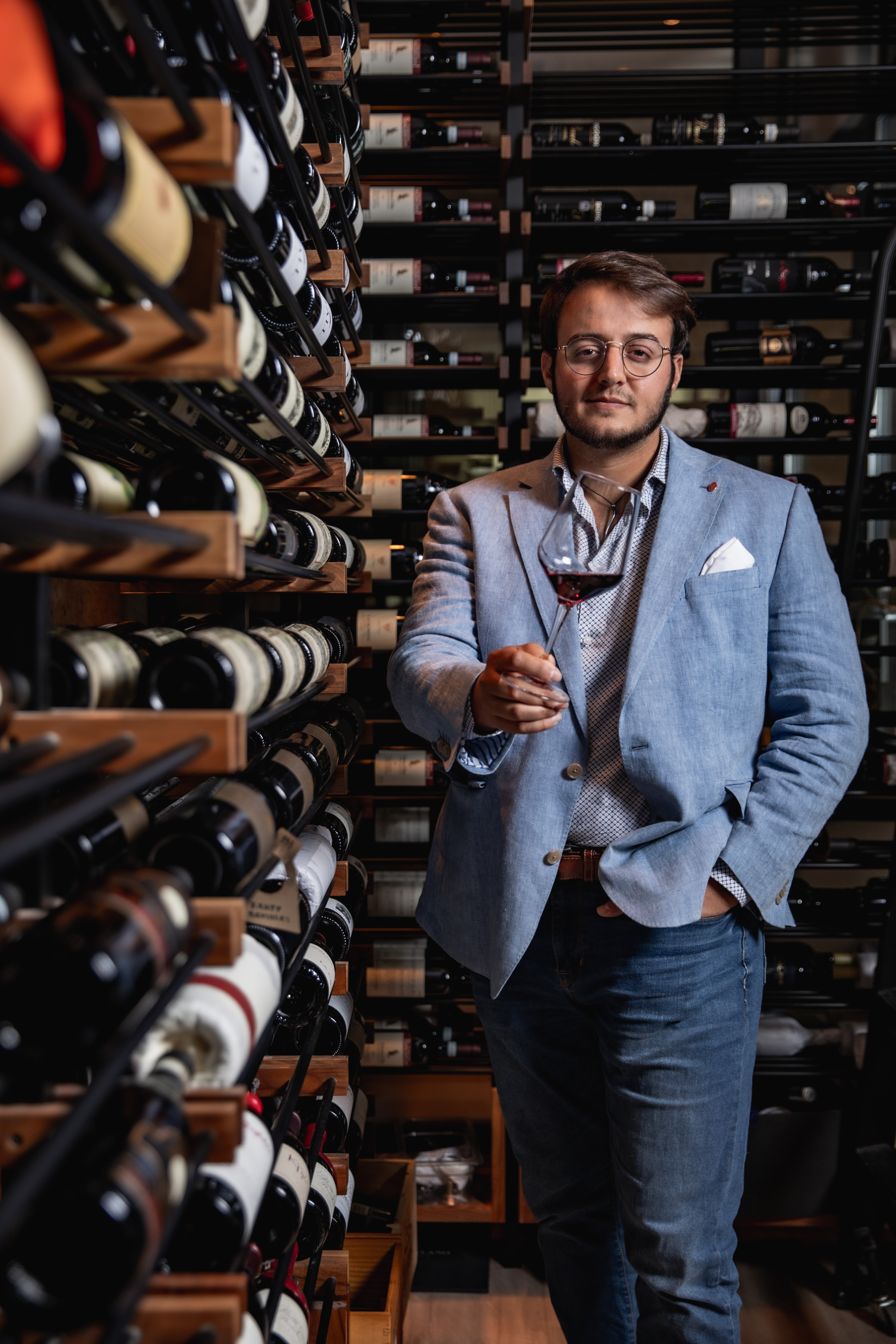
Tonight, I’ll probably open something simple. Maybe from the south.
Something that reminds me why I started doing this in the first place.