
Understanding Real Dessert Wines vs. “Artificially Sweet” Wines
What Is a True Italian Passito?
Among the true gems of Italian and European winemaking, vini passiti hold a very special place. They are intense. Aromatic. Often sweet... but not always. And above all, they are the result of time, patience, and nature.
But what exactly is a Passito?
And how do you distinguish a quality dessert wine from one that is simply “made sweet”?
Let’s explore.
What Is a Passito?
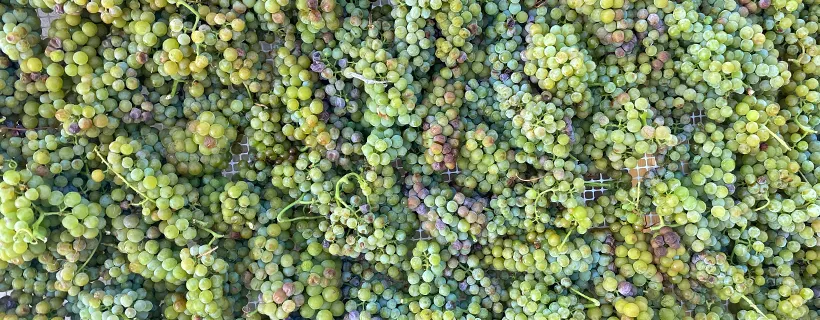
The word Passito comes from the Italian method of appassimento, the partial drying of grapes before fermentation.
Instead of crushing freshly harvested grapes, producers allow them to dehydrate, concentrating:
Natural sugars
Aromatic compounds
Acidity
Texture
As water evaporates from the berries, everything else becomes more intense. The result is a dense, rich must that can produce wines ranging from lusciously sweet to surprisingly structured and even dry (if fermentation converts all sugars to alcohol).
This technique is ancient, older than most modern winemaking technologies, and rooted in craftsmanship rather than manipulation.
The Main Methods of Appassimento
Natural Drying (Traditional Appassimento)
Grapes are laid on racks, straw mats, or hung in ventilated drying rooms (fruttai). Airflow slowly dehydrates the fruit over weeks or months.
This is the traditional method used for many iconic Italian wines such as:
Vin Santo del Chianti
Recioto della Valpolicella
It is slow, labor-intensive, and entirely dependent on climate and precision.
Appassimento on the Vine (Late Harvest / Surmaturazione)
Here, grapes are left on the vine beyond normal ripening. They naturally shrivel under the sun, increasing sugar concentration.
This technique is also common in late-harvest styles and certain Mediterranean climates.
Noble Rot (Botrytized Wines)
In specific microclimates, the fungus Botrytis cinerea, known as “noble rot”, perforates the grape skins, accelerating dehydration and enriching aromas with honeyed, saffron-like complexity.
Famous examples include:
Sauternes
Trockenbeerenauslese
In Italy, botrytized wines are rare and produced only where microclimatic conditions allow controlled development.
Real Dessert Wine vs. “Artificially Sweet” Wine
Here’s the crucial distinction. A true Passito is sweet because:
The grapes were naturally concentrated
Sugar comes from the fruit itself
Acidity remains balanced
Aromas are layered and complex
The sweetness feels integrated, not sticky
Lower-quality sweet wines, on the other hand, may:
Add sugar to finished wine
Use colorants to imitate richness
Add flavorings to simulate complexity
Lack acidity and structure
The difference on the palate? A true Passito feels:
Velvety
Harmonious
Elegant
Long on the finish
A manipulated sweet wine feels:
Flat
Overly sugary
Short
Artificial
Sweetness alone does not define quality. Balance does.
When Should You Drink a Passito?
Passito is often limited to dessert, but it deserves more respect than that.
After Dinner (Meditation Wine)
A small glass on its own. Perhaps with walnuts or dark chocolate.
With Blue Cheeses
The contrast between sweetness and salinity is magical, think gorgonzola or Roquefort.
With Dry Pastries
Classic pairing: Vin Santo and cantucci. Also beautiful with almond cookies or nut-based desserts.
With Spiced or Sweet-Savory Cuisine
Indian, Moroccan, or certain Asian dishes can shine next to a balanced Passito.
Temperature Matters
Passiti often reach 14–15% alcohol or more. They are dense, aromatic, and concentrated.
Serve them slightly cool (around 10–12°C / 50–54°F). Too warm, and:
Alcohol feels hot
Sweetness becomes cloying
Balance disappears
Temperature preserves elegance.
A New Chapter: Our Moscato Passito from Borgo Turrito
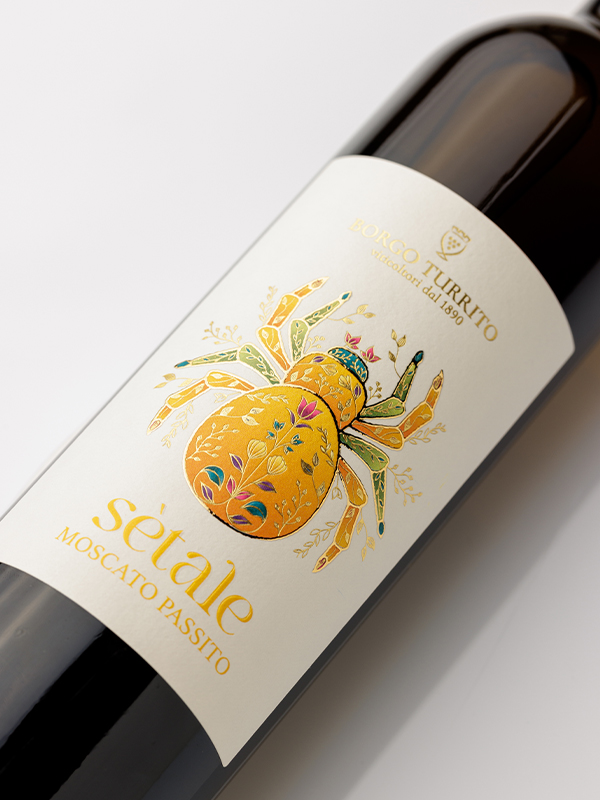
We are proud to introduce the newest addition to our collection: Moscato Passito “Sètale” from Borgo Turrito.
When Luca began producing Passito in 2021 from Moscato Bianco, it was more than a winemaking decision, it was personal. That same year, his son Alessandro was born. The aromatic memory of Moscato, once cultivated by Luca’s father Michele, had shaped his childhood. That perfume lived in the land, in the cellar, in memory itself.
And so this Passito became a bridge across three generations. The name “Sètale” comes from:
Seta (silk) — for the wine’s texture
Ale — short for Alessandro
The label features golden vegetal patterns radiating from a small, vibrant spider, a symbol of connection and strength. Spider silk is the strongest fiber in nature. And there is no bond stronger than that between parent and child.
Tasting Notes
Color: Golden yellow
Aromas: Dried apricot, candied citron, honey, dried fruit
Palate: Sweet, velvety, elegant progression
Finish: Long, with citrus brightness and a subtle saline touch
It pairs beautifully with:
Dry pastries
Almond desserts
Blue cheeses
But most importantly, it tells a story. And that is the difference between a true Passito and a simple sweet wine. One is made with sugar. The other is made with memory, patience, and love.
Try the Wine, 24hr Shipping: