Why I Would NEVER Use Wild Fermentation
Why I Don’t Use Wild Fermentation (And What I Do Instead)
One of the most common questions I get as a winemaker is: “Do you use wild (native) fermentation?” The honest answer is: no—and here’s why. Let’s start with the basics.
What Is Fermentation, Really?
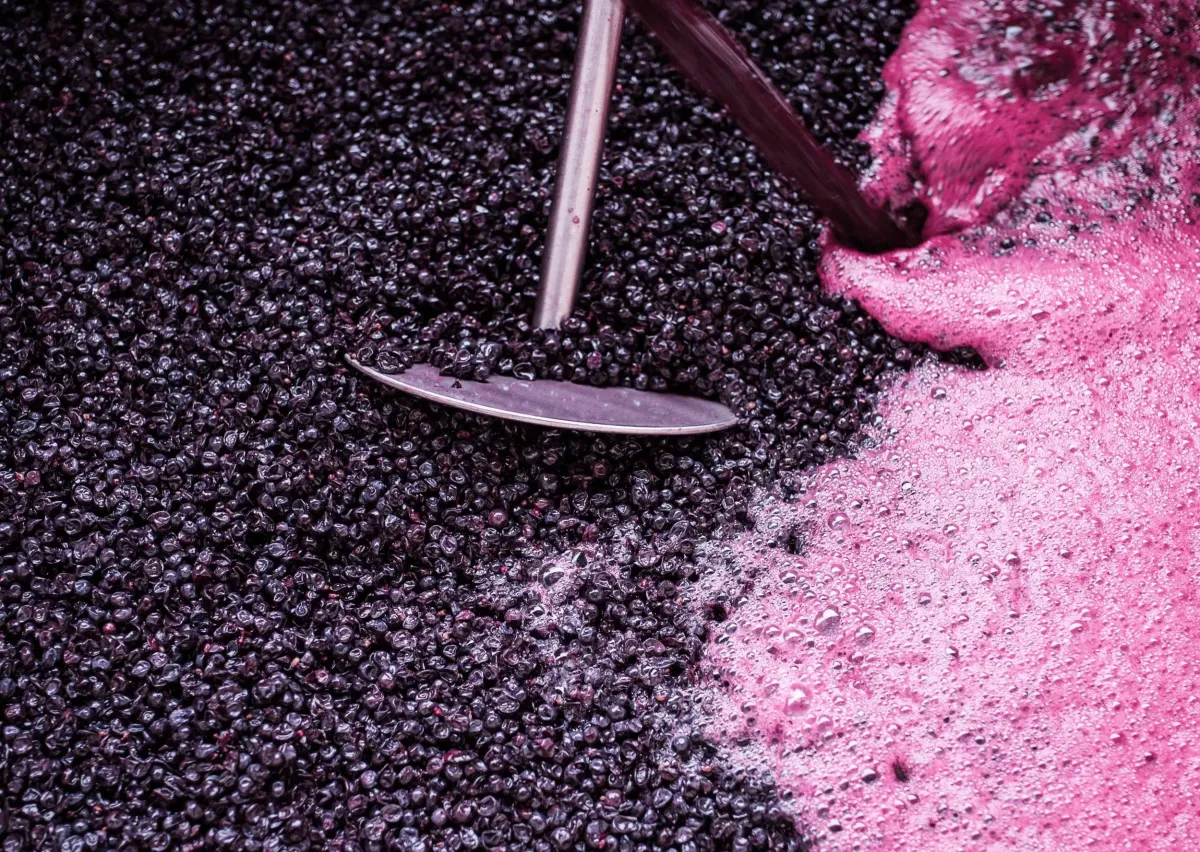
When grapes ripen, they accumulate sugar. Fermentation is the process where microorganisms convert that sugar into alcohol, carbon dioxide, and heat.
Those microorganisms can be:
Yeasts (the good guys 🍞🍺🍷)
Or bacteria and other microbes (often… not so good)
In winemaking, the yeast we trust most is Saccharomyces cerevisiae—the same species used for bread and beer. After hundreds of years of microbiological research, we know this yeast:
Ferments cleanly and completely
Handles alcohol and temperature well
Doesn’t produce harmful or off-putting byproducts
Respects the flavor of the grape and the place it comes from
What “Wild” Fermentation Actually Means
Wild fermentation means letting whatever is on the grape skins start the process naturally. And yes—it will ferment.
But here’s the problem:
On grape skins, there can be thousands of different yeasts and bacteria. Only a small percentage of them are helpful. Many are not. Some:
Create volatile acidity (vinegar smells)
Produce hydrogen sulfide (rotten egg aromas)
Or generate biogenic amines, compounds linked to headaches, hangovers, and—over long exposure—serious health concerns
In the last decade, biogenic amines have become one of the wine industry’s biggest red flags. Certain bacteria produce them as secondary metabolites, and they can:
Trigger migraines
Intensify hangovers
And in extreme cases, pose long-term health risks
So when someone says, “Wild fermentation is more natural,” I always respond:
Natural doesn’t automatically mean safe or better.
The Vineyard Argument: Why It Makes No Sense to Leave Fermentation to Chance
Now, imagine this:
All season long, we work in the vineyard to make sure everything is perfect.
We manage the canopy.
We protect the vines from disease.
We watch for mold, rot, and bacterial pressure.
We time the harvest to the exact moment when the grapes are at their peak—beautiful, clean, healthy fruit full of energy and flavor.
Then we bring those grapes into the winery, crush them…
…and just walk away.
We leave them in a tank and say, “Let’s see what happens.”
At that point, we have no idea what is actually fermenting the wine.
Is it good yeast?
Is it spoilage bacteria?
Is it a strain that will stall halfway through and ruin the wine?
So what’s the point of working month after month in the vineyard to grow incredible fruit…
only to gamble it all away in the cellar?
To me, that makes no sense.
You don’t protect a vineyard all year just to let bacteria destroy it in two weeks.
The Reality of Native Yeasts
Research shows that, on average, only about 10% of native yeast strains are truly viable for quality fermentation. The other 90% can:
Stall fermentations
Create off-flavors
Or allow bad bacteria to take over
That’s not a risk I’m willing to take with wines I put my name on.
The Middle Ground: Native But Selected
Here’s where things get interesting—and where great science meets great wine.
Some of the best wineries in the world don’t choose between “wild” and “commercial.”
They create their own proprietary yeasts—isolated from their vineyards, studied, tested, and selected for quality.
✔ They come from the terroir
✔ They’re safe and predictable
✔ They enhance aroma and texture
✔ They finish fermentation cleanly
✔ They don’t hide the grape or the place
Winemakers in Uruguay, Sicily, Hungary, South Africa, and Oregon have built libraries of vineyard-specific yeasts that:
Express terroir
Add complexity
Avoid defects
And protect the health of the drinker
That’s not industrial winemaking.
That’s precision, respect, and responsibility.
My Philosophy at Above Wines
I believe in low-intervention—but not no-intervention.
Wine doesn’t “make itself.”
A winemaker’s job is to protect:
The grape
The drinker
And the identity of the wine
So instead of trusting thousands of unknown microbes, I trust:
✔ Yeasts that are studied
✔ Yeasts that are proven
✔ Yeasts that respect the fruit
✔ Yeasts that let terroir speak without risking flaws or health
In my cellar, fermentation isn’t a gamble.
It’s a controlled expression of nature.
Because real authenticity isn’t chaos.
It’s clarity, honesty, and intention.
From Philosophy to the Glass: Abruzzo & Our Passo Cale Montepulciano d’Abruzzo Riserva
One of the regions where this philosophy truly comes alive is Abruzzo—a place I deeply respect for its raw beauty, mountain air, and powerful yet honest wines.
Abruzzo is where tradition meets intensity. The star grape here is Montepulciano, and when it’s handled with care, it produces wines that are bold, savory, and deeply satisfying.
That’s exactly what you’ll find in our Passo Cale Montepulciano d’Abruzzo Riserva.
This is a wine that speaks with confidence.
In the glass, it delivers a symphony of ripe dark fruit, subtle spice, and savory depth. Each sip is full, balanced, and harmonious—rich without being heavy, powerful without losing elegance.
Try the Wine:
Riserva Montepulciano, Passo Cale, Abruzzo
What gives this wine its soul is: time.
Our Passo Cale Riserva is aged for a minimum of 12 months in Slovenian oak barrels, allowing the wine to evolve slowly and naturally. The oak adds structure and complexity without overpowering the fruit. The result is a wine with real dimension—something you can think about while you drink, but also simply enjoy.
For the best experience, serve it around 64–68°F. That’s when the aromas open up and the layers really start to speak.
At the table, this is a serious food wine. It shines with:
• Pappardelle al ragù
• Grilled steaks
• Roasted lamb
• Game dishes and hearty winter meals
But it’s just as perfect for a quiet night when you want something meaningful in your glass.
To me, Passo Cale is more than a bottle.
It’s a story of Abruzzo.
Of tradition.
Of discipline.
Of letting the grape speak—without letting chaos take over.
This is what Above Wines is about:
Respect the vineyard.
Respect the cellar.
Respect the drinker.
And always let the wine tell the truth..