The AROMAS of Wine - Why Your Wine Smells Like Roses
THE AROMAS OF WINE
A SERIES FROM THE CELLAR
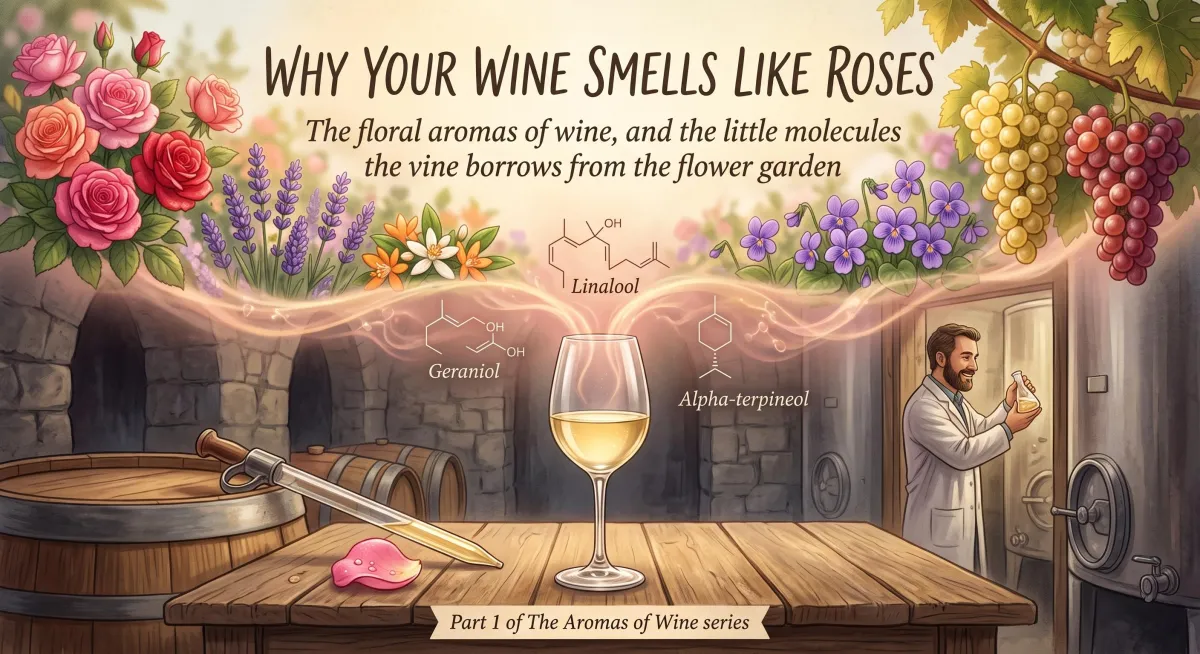
Why Your Wine Smells Like Roses
The floral aromas of wine, and the little molecules the vine borrows from the flower garden
Part 1 of The Aromas of Wine series
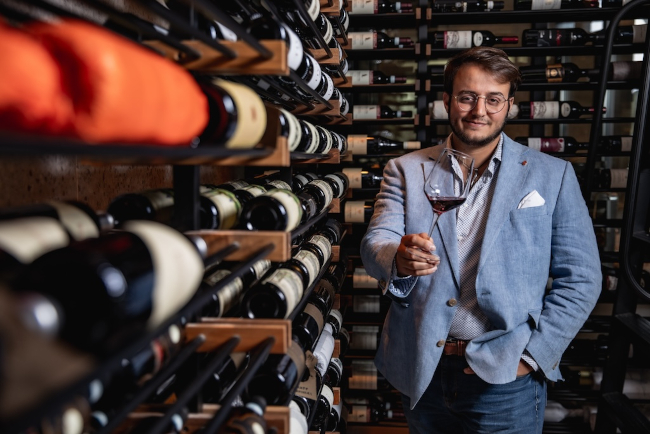
One of my favorite moments in the cellar comes in early spring, when I pull a sample of young white wine from the tank, swirl it, and suddenly the whole room smells like jasmine. People ask me all the time: did you add something? Is there actual flower essence in there? The answer is no — and the real story is much more beautiful than that.
Floral aromas show up in almost every wine we make, white or red. They are one of the first things your nose picks up in a young wine, and one of the most poetic things a glass can offer. So let me walk you through where they come from — with just enough chemistry to make you the most interesting person at your next dinner party.
The vine and the rose speak the same language
Here is the part I find magical. The molecules that make a Gewürztraminer smell of roses are, in many cases, the very same molecules that make an actual rose smell of roses. The grapevine simply learned to build them too.
These molecules belong mostly to a family called terpenes — small, lightweight compounds that plants everywhere use as their perfume kit. Because they are so light, they evaporate easily from the surface of your wine, float up out of the glass, and land on the smell receptors in your nose. That's all an 'aroma' really is: a tiny volatile molecule making the short flight from wine to nostril.
A few of the stars of this family, and where you have already met them:
Geraniol — the signature scent of roses and geraniums. It gives Gewürztraminer its unmistakable rose-petal perfume.
Linalool — the soul of lavender and orange blossom. You will find it in Moscato, in Malvasia, and in countless perfumes and soaps on your bathroom shelf.
Alpha-terpineol — a lilac-like note that, together with linalool, paints the violet aromas of Sangiovese.
Terpenes live mostly in the skin of the grape. That's one reason we winemakers fuss so much about how gently we press, and how long the juice stays in contact with the skins — we are deciding how much of that flower garden makes it into your glass.
The sugar trick: aromas hiding in plain sight
Now, a lovely secret of wine chemistry. Much of a grape's floral potential arrives at the winery locked up. Many terpenes in the berry are chemically tied to a sugar molecule, and in that bound form they have no smell at all. Think of them as perfume bottles with the cap still on.
During fermentation and aging, yeast enzymes and the wine's natural acidity slowly snip that sugar off, uncapping the bottle and releasing the scent. This is why a wine can actually become more floral months after fermentation — aromas that were silent in the grape gradually find their voice. When people say a wine 'opens up,' this is part of what is literally happening.
Fermentation adds its own bouquet too. Yeast produces fruity-floral compounds called esters, so a wine's flowers come from two gardens at once: the vineyard (what sommeliers call primary aromas) and the fermentation tank (secondary aromas).
Reading the flowers: what they tell you about a wine
Here is a simple trick I teach visitors at the winery. Ask yourself: are the flowers in my glass fresh or dried? White, yellow, or red? The answer tells you a surprising amount about the wine's age and life story.
Young white wines smell of fresh white flowers: jasmine, acacia, hawthorn, orange blossom. Crisp, bright, springtime scents.
More evolved whites — especially those aged in wood or amphora — drift toward yellow flowers: broom, dandelion, mimosa, sunflower. Warmer, honeyed, late-summer scents.
Young red wines offer red and purple flowers: violet, rose, iris. Think of the violet note in a young Sangiovese.
Long-aged reds smell of dried flowers and potpourri — the famous 'faded rose' of a mature Nebbiolo, one of the most moving scents in all of wine.
Rosés can go either way, borrowing from both the white and red flower cupboards depending on how they were made.
The chemistry behind this evolution is gentle and slow: fresh-flower terpenes gradually transform, oxidize, and recombine over the years, the same way a bouquet on your kitchen table softens from bright petals to potpourri. The wine is not losing its flowers — it is pressing them between the pages of a book.
Why some noses find the violets first
One last thing worth knowing: we do not all smell alike. Each aroma molecule has a perception threshold — the tiny concentration below which your nose can't detect it — and those thresholds vary enormously from person to person. Some molecules shout at a few billionths of a gram per liter; others whisper even in large amounts. So if your friend finds rose petals and you find lavender in the same glass, you are both right. Wine tasting is a duet between the wine's chemistry and your own.
From my cellar to your table: pour a young Moscato or Gewürztraminer next to a mature red, and smell them side by side before sipping. Fresh orange blossom in one glass, dried roses in the other — that is the whole life of a flower, told in wine.
Next time you pour a glass, close your eyes before you sip. Somewhere in there, a flower is waiting. Cin cin!
For all this new "ITALIAN COASTAL RESTAURANTS" opening in Dallas, try a real flavor of Italian Coastal Wines!
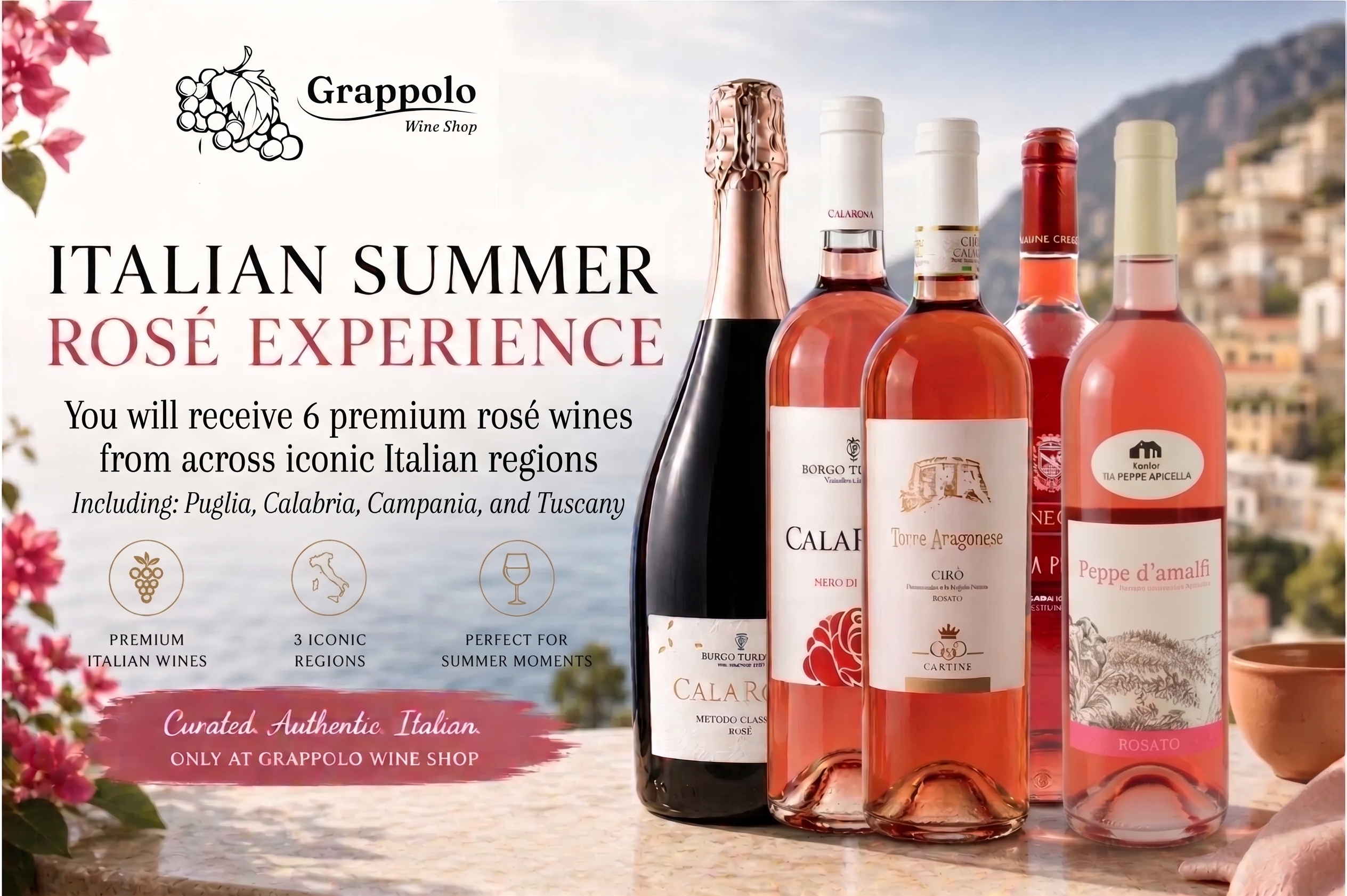
What if summer had a scent? Roses, ripe red berries, sea air, and the warmth of the Italian coast. This curated 6-bottle collection brings together rosé wines from Puglia, Calabria, and Campania, three beautiful coastal regions where sunshine, Mediterranean breezes, and native grapes create vibrant and refreshing rosati.
Among the six bottles is a rare traditional-method sparkling rosé, Italy’s elegant answer to Champagne, with fine bubbles and delicate floral notes that can remind you of fresh rose petals.
Six wines. Three coastal regions. One taste of Italian summer.
🌹 Winemaker Selected
🇮🇹 Puglia • Calabria • Campania
🥂 Includes Rare Traditional-Method Sparkling Rosé
🍷 Small-Production Wines
🚚 Fast Delivery in Texas & California
💰 Save 15–20% vs. Individual Bottles
Limited Allocation
Try the Wine, 24hr Shipping:
ITALIAN ROSE EXPERIENCE, 6 Pack
Invite us to your Party!
We'll Make it a great wine Experience!
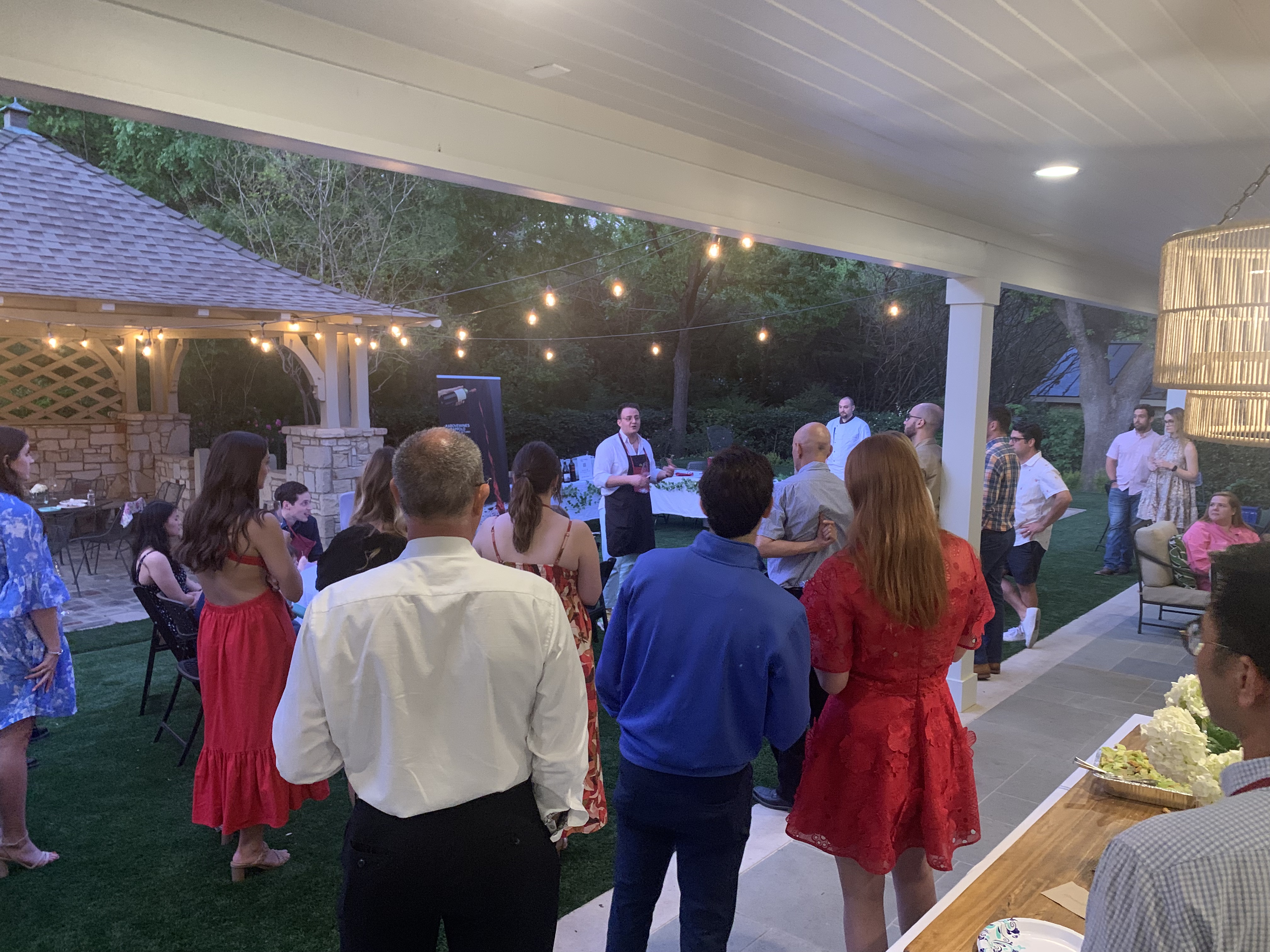
If reading this made you think about your own gathering, even just a small dinner with friends, a birthday, a team night, or simply an excuse to bring people together, then I would genuinely love to hear from you.
There is no pressure with us. No obligation. No complicated process. Just a conversation.
We’ll talk about what you have in mind, the kind of atmosphere you want, the people you’re inviting, and we’ll build something around that. It can be as relaxed as friends sitting around a couch with pizza and wine, or as elegant as a multi-course dinner with full service. Most of the time, the best events are the ones that feel the most natural to you.
My team and I take care of everything, but more importantly, we make sure it feels like your evening, not a scripted event, not a performance, just something real, warm, and memorable.
So if you’re curious, even slightly, reach out.
We’ll be happy to chat, share ideas, and help you understand what’s possible.
And if it doesn’t feel like the right fit, that’s completely okay too. Wine should never feel forced.
But if it does come together, I can promise you one thing from my heart:
we will create something people will remember for a long time.
CLICK TO FIND OUT MORE ABOUT
OUR PRIVATE EXPERIENCES
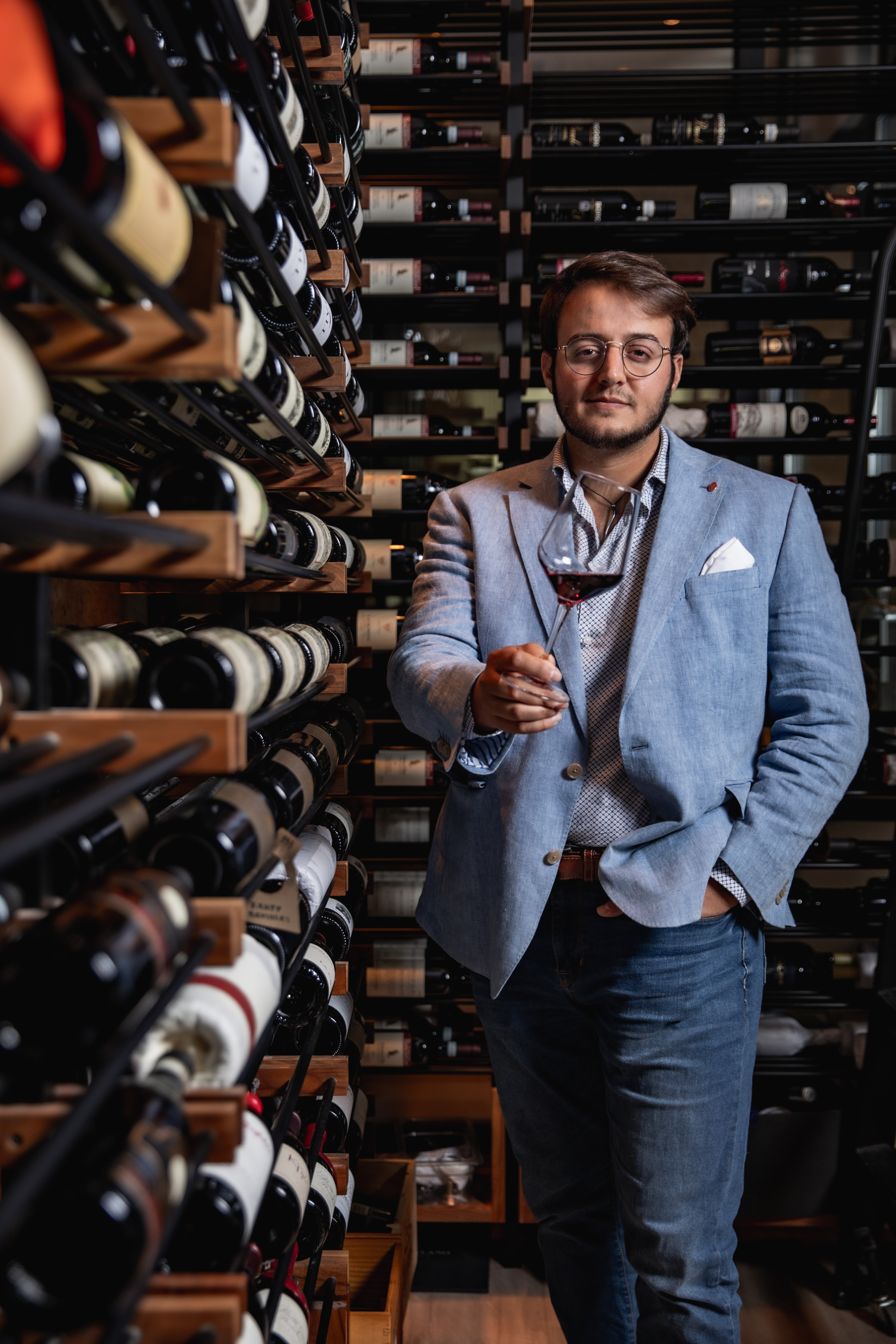
Tonight, I’ll probably open something simple. Maybe from the south.
Something that reminds me why I started doing this in the first place.